Smart Technology for Elderly Home Care: How IoT and Wearables Are Transforming Senior Safety in India
Karnataka Nursing Council Reg. No. 312786
BSc Nursing · 5+ years Apollo Hospital ICU · BLS/CPR Certified
Medically reviewed by Sumit Kumar, RN
India's elderly population has crossed 153 million, and with the nuclear family structure becoming the norm, millions of seniors live alone or with limited family support. The convergence of IoT (Internet of Things), wearable health devices, and AI-powered monitoring is creating a technological revolution in elderly home care – making it safer, smarter, and more connected than ever before.
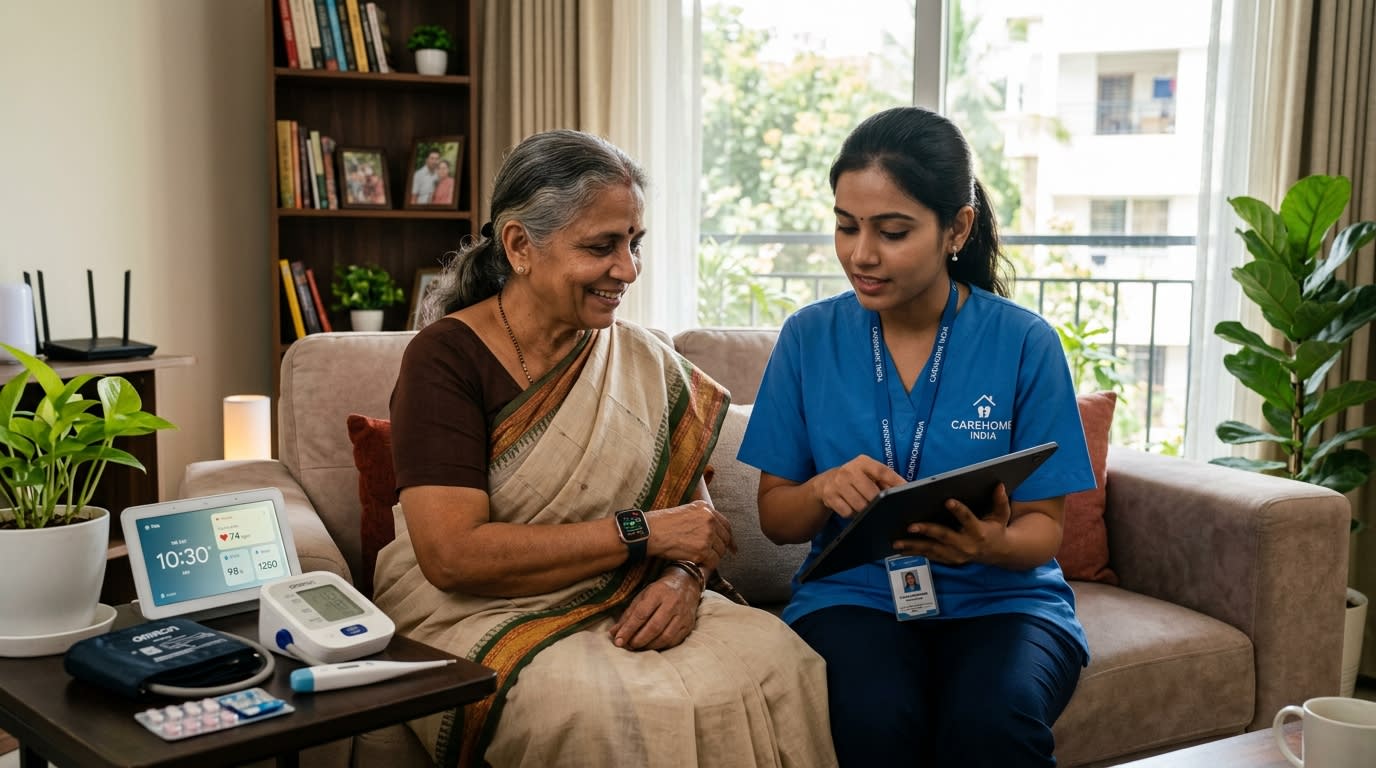
At NurseNest Plus Bangalore, we embrace technology as a complement to compassionate human care, integrating smart health tools into our home nursing services for enhanced patient safety and family peace of mind.
The Technology-Enabled Elderly Care Revolution in India
2026 has seen unprecedented adoption of health technology in Indian households:
- Smart health wearables market in India grew 45% year-on-year, with seniors being the fastest-growing user segment
- Ayushman Bharat Digital Mission (ABDM) integration now allows seamless sharing of health records between home care providers and hospitals
- Government's push to train 1.5 lakh professional caregivers includes digital literacy and health-tech training
- IoT-enabled home health monitoring devices are now available at affordable prices (₹2,000–₹15,000 range)
Essential Smart Devices for Elderly Home Care
1. Health Monitoring Wearables
Modern smartwatches and health bands offer life-saving features for seniors:
- Continuous heart rate monitoring – Detects irregular heartbeats (arrhythmia) and alerts caregivers
- Blood oxygen (SpO2) tracking – Critical for patients with COPD, heart failure, or respiratory conditions
- Fall detection – Automatically detects falls and sends SOS alerts to family and emergency contacts
- ECG monitoring – Some advanced watches can take single-lead ECG readings on demand
- Sleep tracking – Monitors sleep quality, which is crucial for elderly health assessment
- Location tracking (GPS) – Essential for dementia patients who may wander
2. Smart Blood Pressure Monitors
Connected BP monitors that sync with smartphone apps:
- Automatic readings stored digitally – no need to remember or write down numbers
- Trend analysis with graphs showing BP patterns over weeks and months
- Abnormal reading alerts sent directly to family members and healthcare providers
- Integration with health apps for comprehensive cardiovascular monitoring
- Recommended brands available in India: Omron Connect, BPL Smart, Beurer BC 87
3. Smart Glucometers for Diabetic Seniors
- Bluetooth-enabled glucometers that sync readings to smartphone apps automatically
- Pattern recognition AI that identifies blood sugar trends and predicts highs/lows
- Medication reminders based on glucose readings
- Shareable reports that can be sent directly to the treating doctor
- Continuous Glucose Monitoring (CGM) systems for Type 1 and advanced Type 2 patients
4. Automated Medication Dispensers
Medication non-adherence is a major problem in elderly care. Smart solutions include:
- Programmable pill dispensers – Dispense the right medicine at the right time with audio/visual reminders
- Locked dispensers – Prevent double-dosing or accidental overdose in confused patients
- App-connected reminders – Family members get notifications if medication is not taken on time
- Multi-dose packaging – Pre-sorted daily medication strips reduce confusion
5. Smart Home Safety Devices
Making the home environment safer for seniors:
- Motion sensors – Detect unusual inactivity patterns (e.g., no movement in the kitchen by 10 AM may indicate a problem)
- Smart door sensors – Alert family if the front door is opened at unusual hours (important for dementia patients)
- Smart lighting – Motion-activated nightlights in hallways and bathrooms to prevent falls
- Water leak detectors – Prevent slip hazards from unnoticed water spills
- Gas leak detectors – Essential safety for seniors who cook independently
- Video doorbells – Allow seniors to see and communicate with visitors without opening the door
6. Telehealth and Remote Consultation Platforms
- Video consultations with specialists without travel stress
- Digital prescription management and online pharmacy delivery
- Remote ECG and stethoscope readings shared in real-time with doctors
- Integration with ABDM for unified health records accessible to any provider
How Smart Technology Complements Professional Home Nursing
Technology is powerful, but it cannot replace the human touch. Here's how they work together:
- Data + Compassion – Smart devices collect data; trained nurses interpret it and provide personalised care responses
- Alerts + Action – A fall-detection alert is useless without someone to respond; our nurses provide immediate assistance
- Monitoring + Intervention – Abnormal vitals trigger nurse intervention – adjusting positions, administering medications, or calling the doctor
- Records + Reporting – Digital health records maintained by nurses are shared with families and doctors for coordinated care
- Automation + Empathy – A pill dispenser reminds; a nurse ensures the patient actually takes the medicine and watches for side effects
Practical Guide: Setting Up Smart Health Monitoring at Home
Step 1: Assess Needs
- What chronic conditions does the patient have? (diabetes, hypertension, heart disease, COPD)
- Is there a fall risk? (mobility issues, balance problems, medications causing dizziness)
- Does the patient live alone or have cognitive decline?
Step 2: Choose the Right Devices (Budget-Friendly Options)
- Essential kit (₹5,000–₹10,000): Smart BP monitor + pulse oximeter + smartphone app
- Standard kit (₹10,000–₹25,000): Add health smartwatch with fall detection + smart glucometer
- Comprehensive kit (₹25,000–₹50,000): Add motion sensors, medication dispenser, and emergency alert system
Step 3: Setup and Training
- Configure devices and connect to family members' phones
- Train the elderly person on basic usage (keep it simple – one or two actions maximum)
- Set up emergency contact lists and auto-alert protocols
- Test all alert systems regularly
NurseNest Plus: Technology-Enhanced Home Nursing
Our nurses are trained in digital health tools and provide:
- Digital vitals tracking – BP, blood sugar, SpO2, temperature logged digitally every shift
- Real-time family updates – Daily health reports shared via WhatsApp/app with family members
- Device management – Ensuring wearables are charged, calibrated, and functioning correctly
- Teleconsultation facilitation – Setting up video calls with doctors and sharing health data
- Emergency protocols – Trained to respond to device alerts with appropriate medical action
- ABDM integration support – Helping families register and maintain digital health records
NurseNest Plus – Where Technology Meets Compassion for Smarter Elderly Care