
Dementia and Alzheimer's Home Care: A Compassionate Guide for Indian Families
Karnataka Nursing Council Reg. No. 312786
BSc Nursing · 5+ years Apollo Hospital ICU · BLS/CPR Certified
Medically reviewed by Sumit Kumar, RN
India is facing a rapidly growing dementia crisis. An estimated 8.8 million Indians currently live with dementia, and this number is projected to reach 17 million by 2036. Alzheimer's disease accounts for 60–70% of all dementia cases. Yet, awareness remains dangerously low – most Indian families attribute memory loss in elderly parents to "normal ageing" and delay seeking help until the condition is advanced.
At NurseNest Plus Bangalore, our trained caregivers provide compassionate, structured home care for dementia patients, allowing them to live with dignity in familiar surroundings.
Understanding Dementia: More Than Just Memory Loss
Dementia is not a single disease but a group of symptoms affecting memory, thinking, and social abilities severely enough to interfere with daily life:
- Alzheimer's Disease – Progressive memory loss, confusion, personality changes (most common type)
- Vascular Dementia – Caused by strokes or reduced blood flow to the brain; often seen alongside hypertension and diabetes
- Lewy Body Dementia – Hallucinations, movement problems, sleep disturbances
- Frontotemporal Dementia – Personality and behaviour changes, language difficulties (affects younger seniors)
The Three Stages of Alzheimer's Disease
Stage 1: Early/Mild (2–4 years)
- Forgetting recent conversations or events
- Misplacing items regularly (keys, glasses, phone)
- Difficulty finding the right words
- Getting lost in familiar places
- Trouble managing finances or planning meals
- Patient is still largely independent but needs subtle support
Stage 2: Moderate (2–10 years)
- Cannot remember their own address, phone number, or family members' names
- Confusion about time, date, and place
- Needs help with daily activities: bathing, dressing, toileting
- Behavioural changes: agitation, wandering, suspicion, aggression
- Sleep disturbances – sundowning (increased confusion in the evening)
- Requires daily caregiver support
Stage 3: Severe/Late (1–3 years)
- Cannot communicate verbally beyond a few words
- Complete dependence for all activities
- Loss of awareness of surroundings
- Difficulty swallowing (risk of aspiration pneumonia)
- Loss of bladder and bowel control
- Requires 24/7 professional nursing care
Communication Techniques for Dementia Patients
Effective communication requires patience and specific techniques:
Do's:
- Approach from the front; make eye contact before speaking
- Use short, simple sentences with one idea at a time
- Speak slowly and clearly; allow time for the person to respond
- Use names instead of pronouns ("Drink your tea, Amma" not "Drink it")
- Offer choices between two options, not open-ended questions
- Use gestures, pictures, or demonstrations alongside words
- Validate feelings even if the content doesn't make sense
Don'ts:
- Don't argue, correct, or say "I already told you"
- Don't talk about the person as if they're not there
- Don't rush or show impatience
- Don't use baby talk or condescending tones
- Don't test their memory ("Do you remember who I am?")
Managing Behavioural Changes
Agitation and Aggression
- Identify triggers: pain, hunger, need to use the bathroom, overstimulation
- Stay calm; speak softly and reassuringly
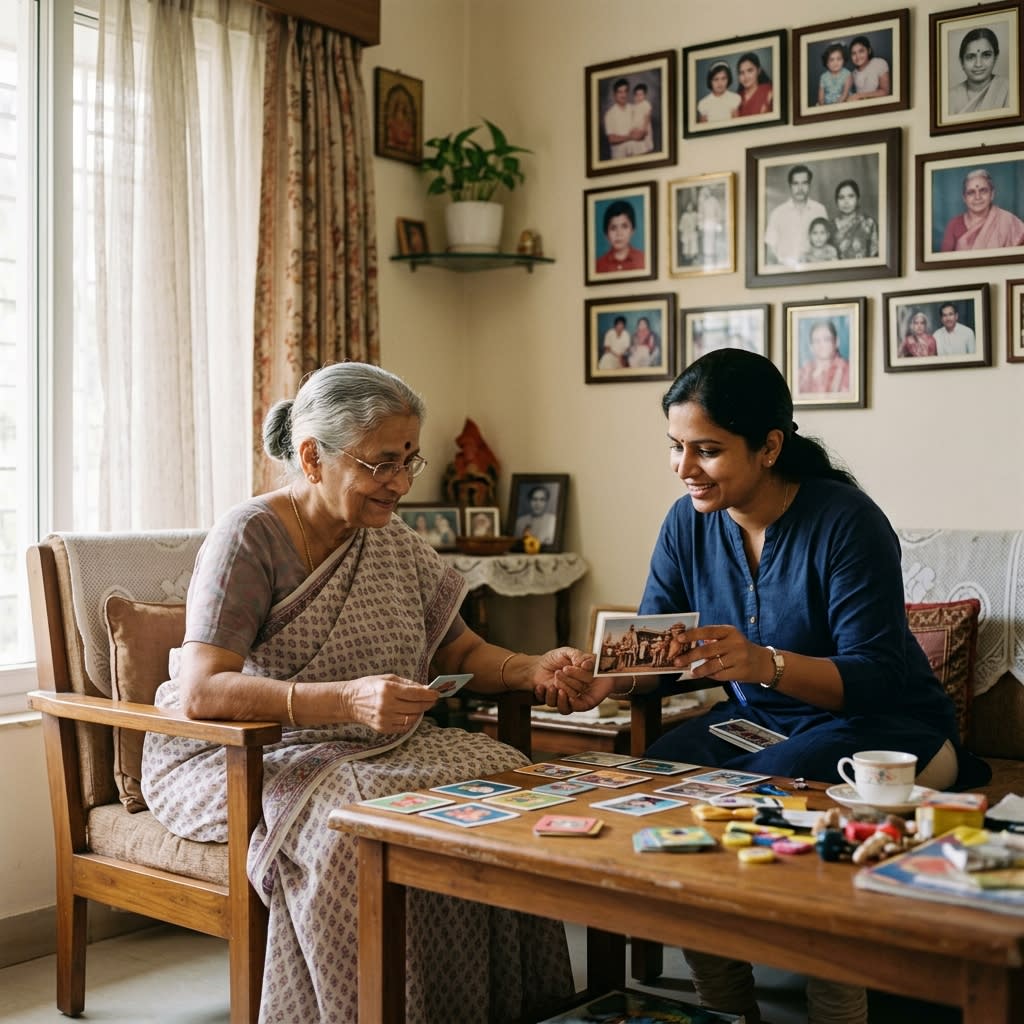
- Redirect attention to a calming activity: music, looking at photos, a warm drink
- Ensure adequate lighting – dark spaces increase confusion
- Maintain a consistent daily routine
Wandering
- Install locks high or low on doors (out of direct sight line)
- Use door alarms or motion sensors
- Ensure the patient wears an ID bracelet with name and emergency number
- Keep a recent photograph accessible in case of emergency
- Register with local police stations as a precaution
Sundowning (Evening Confusion)
- Keep the home well-lit in the evening; avoid shadows
- Reduce caffeine and sugar intake after noon
- Engage in calming activities: gentle music, light snacks, familiar routines
- Ensure daytime activity and exposure to natural light
- Avoid stimulating TV programmes in the evening
Home Safety Modifications for Dementia Patients
- Kitchen – Remove/lock knives, disable the gas stove when unattended, use auto-off appliances
- Bathroom – Install grab bars, anti-slip mats, remove locks from inside, set water heater temperature below 49°C
- Bedroom – Use nightlights, remove trip hazards (loose rugs, cables), install bed rails
- Doors and windows – Install locks or alarms to prevent wandering
- Medications – Lock away all medicines; only the caregiver should handle medication
- Valuables – Keep important documents, keys, and money in a secure location
Activities That Slow Cognitive Decline
- Music therapy – Play favourite songs from their youth; singing engages deep memory circuits
- Photo reminiscence – Looking at old family photos and sharing memories
- Simple puzzles – Jigsaw puzzles, sorting activities, matching games
- Art and crafts – Colouring, clay modelling, rangoli making
- Gardening – Watering plants, potting soil – sensory engagement
- Cooking together – Simple tasks like kneading dough or sorting vegetables
- Prayer and bhajans – Deeply ingrained spiritual practices are often preserved even in advanced dementia
NurseNest Plus Dementia Care at Home
Our trained dementia caregivers provide:
- Structured daily routines that reduce confusion and anxiety
- Safe supervision including wandering prevention and fall protection
- Personal care – Bathing, dressing, grooming, and toileting with dignity and patience
- Medication management – Ensuring all cognitive and behavioural medications are taken on schedule
- Cognitive stimulation – Daily brain-engaging activities and social interaction
- Nutritional care – Preparing appropriate meals and managing feeding difficulties
- Family respite – Giving exhausted family caregivers time to rest and recharge
- Behavioural management – Trained de-escalation techniques for agitation and aggression
NurseNest Plus – Preserving Dignity, Protecting Memories, One Day at a Time