
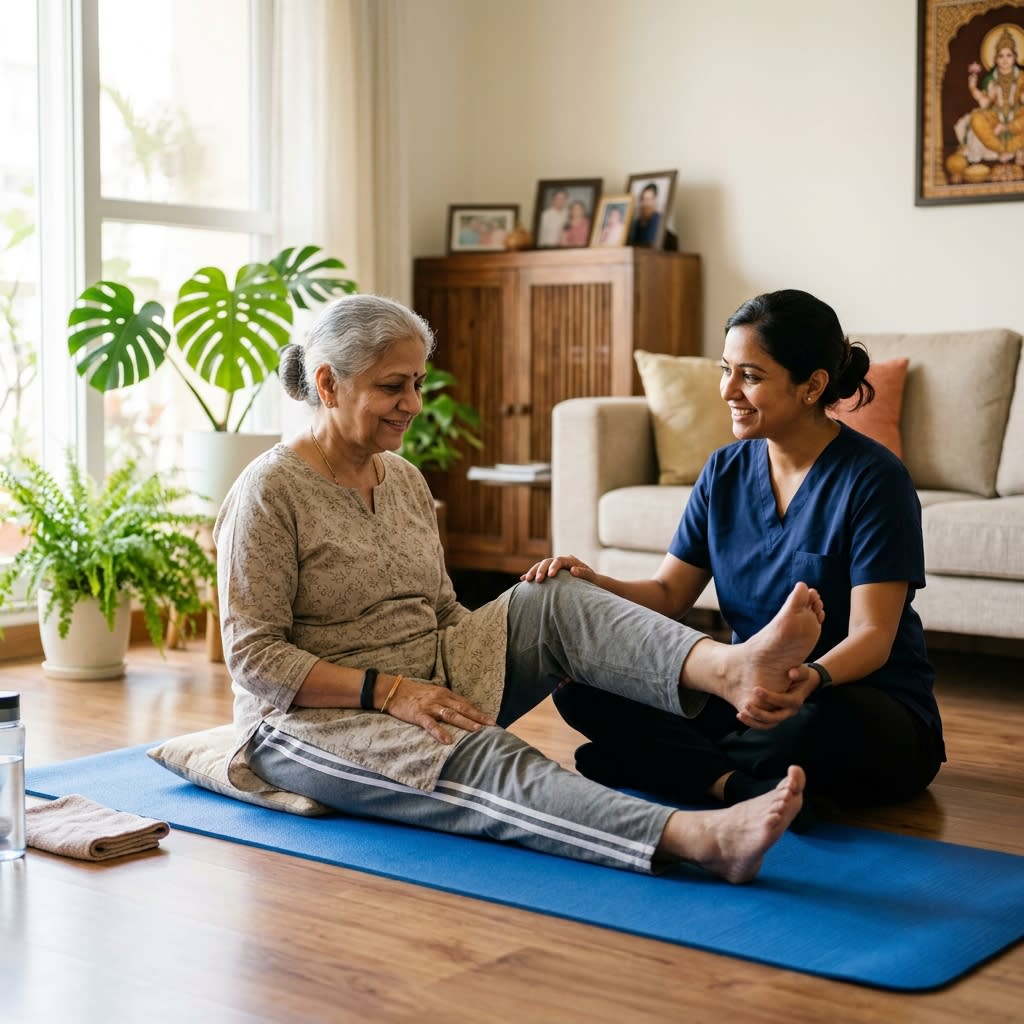
Home Physiotherapy for Senior Citizens in Bangalore: Stay Active, Stay Independent
Karnataka Nursing Council Reg. No. 312786
BSc Nursing · 5+ years Apollo Hospital ICU · BLS/CPR Certified
Medically reviewed by Sumit Kumar, RN
India's senior population is growing at an unprecedented rate – over 153 million Indians are above 60, and mobility issues affect nearly 40% of them. For elderly individuals in Bangalore, regular physiotherapy is not a luxury; it is a medical necessity that determines whether they maintain independence or become bedridden.
The challenge? Most seniors find it difficult to travel to physiotherapy clinics regularly, especially during monsoon season or extreme heat. Home physiotherapy solves this problem by bringing expert rehabilitation directly to your doorstep.
Why Physiotherapy Is Critical for Senior Citizens
After age 60, the body undergoes significant changes that physiotherapy directly addresses:
- Muscle loss (sarcopenia) – Seniors lose 3–8% of muscle mass per decade after 30. Resistance exercises slow this loss.
- Joint stiffness – Arthritis affects 60% of Indian seniors. Regular movement prevents joints from "freezing"
- Balance decline – Falls are the leading cause of fractures in elderly. Balance training reduces fall risk by 40%
- Bone density loss – Weight-bearing exercises help maintain bone strength and prevent osteoporotic fractures
- Chronic pain – Physiotherapy provides drug-free pain relief for back pain, knee pain, and shoulder problems
- Post-surgical recovery – After hip replacement, knee replacement, or cardiac surgery, guided rehabilitation is essential
Common Conditions Treated with Home Physiotherapy
1. Osteoarthritis (Knee and Hip)
The most common musculoskeletal complaint in Indian seniors:
- Quadriceps strengthening exercises to support the knee joint
- Range-of-motion exercises to maintain flexibility
- Hot pack application before exercises for pain relief
- Gait training with appropriate walking aids
- Weight management guidance to reduce joint stress
2. Frozen Shoulder (Adhesive Capsulitis)
- Pendulum exercises and wall climbing exercises
- Stretching exercises for shoulder capsule
- Progressive strengthening with resistance bands
- Hot and cold therapy for pain management
3. Lower Back Pain
- Core strengthening exercises (modified for seniors)
- Pelvic tilts and gentle stretching
- Posture correction training
- McKenzie exercises for disc-related pain
- Ergonomic advice for daily activities
4. Post-Fracture Rehabilitation
- Progressive weight-bearing as per orthopaedic surgeon's protocol
- Muscle strengthening around the fracture site
- Joint mobilisation to prevent stiffness
- Balance and gait training
- Fall prevention strategies
5. Stroke and Neurological Rehabilitation
- Passive and active range-of-motion exercises
- Balance and coordination training
- Functional mobility training (bed to chair, standing, walking)
- Hand and fine motor skill exercises
Safe Home Exercise Programme for Seniors
Note: Always consult a physiotherapist before starting any exercise programme. These are general guidelines.
Warm-Up (5 minutes)
- Seated marching – lift knees alternately while sitting (20 reps)
- Ankle circles – rotate feet clockwise and anticlockwise (10 each)
- Neck stretches – gentle side bends, hold 10 seconds each side
- Shoulder rolls – forward and backward (10 each direction)
Strengthening (15 minutes)
- Chair squats – Stand up from chair, sit back down slowly (10 reps, 2 sets)
- Wall push-ups – Stand arm's length from wall, push-ups against wall (10 reps)
- Heel raises – Hold chair back, rise on toes (15 reps)
- Leg extensions – Seated, straighten one leg, hold 5 seconds (10 each leg)
- Bicep curls – Using 500g–1kg weights or water bottles (10 reps each arm)
Balance Training (10 minutes)
- Single leg stand – Hold chair, stand on one leg (30 seconds each)
- Tandem walking – Walk heel-to-toe along a straight line (10 steps)
- Weight shifting – Stand and shift weight from left to right foot (20 times)
- Sit-to-stand without hands – Cross arms, stand up from chair (5 reps)
Cool Down and Stretching (5 minutes)
- Hamstring stretch – seated, reach toward toes (hold 15 seconds)
- Chest stretch – clasp hands behind back, squeeze shoulder blades (hold 15 seconds)
- Gentle deep breathing – 5 slow, deep breaths
Benefits of Home Physiotherapy vs Clinic Visits
- No travel stress – Eliminates the risk of falls during travel, especially in monsoon
- Personalised environment – Exercises practised in the actual living space where falls happen
- Home safety assessment – Physiotherapist identifies trip hazards and recommends modifications
- Family involvement – Family members learn exercises and can assist between sessions
- Consistency – Higher adherence rates compared to clinic visits (studies show 85% vs 60%)
- Real-world practice – Practicing daily activities (getting out of bed, using the bathroom) in the actual environment
NurseNest Plus Home Physiotherapy Support
While our core service is nursing care, we coordinate physiotherapy as part of comprehensive elderly care:
- Our nurses assist with daily exercise routines prescribed by physiotherapists
- Progress tracking – Detailed records of exercises done and mobility milestones
- Pain management – Hot/cold therapy and medication timing around exercise sessions
- Fall prevention – 24/7 supervision and home safety modifications
- Coordination with physiotherapists, orthopaedic surgeons, and physicians
NurseNest Plus – Helping Seniors Move, Thrive, and Stay Independent at Home