
Post-Surgery Recovery at Home: Why Hospital-at-Home Is the Biggest Healthcare Trend in India 2026
Karnataka Nursing Council Reg. No. 312786
BSc Nursing · 5+ years Apollo Hospital ICU · BLS/CPR Certified
Medically reviewed by Sumit Kumar, RN
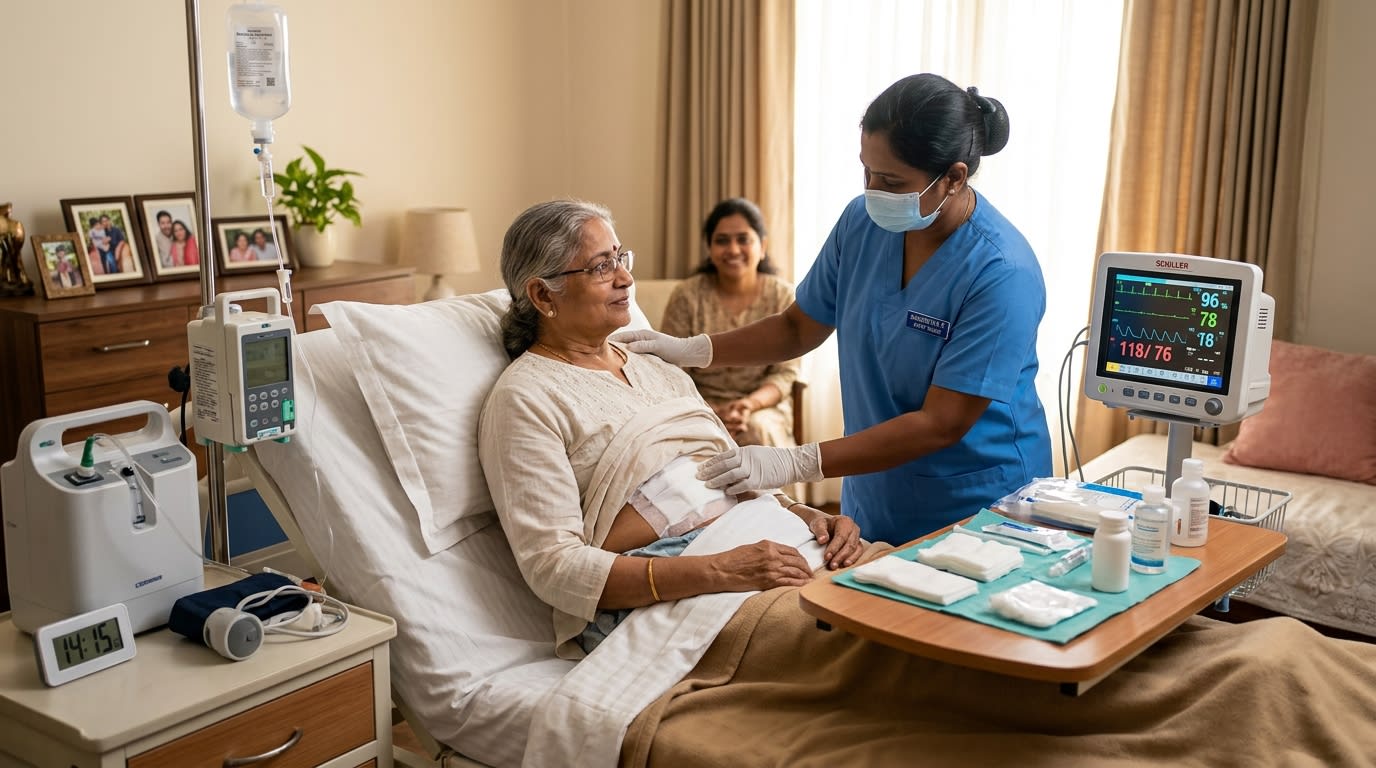
The way India delivers post-surgical care is undergoing a fundamental transformation. The hospital-at-home model – where patients recover from surgery in their own homes with professional nursing support – has emerged as the biggest healthcare trend of 2026. Leading hospitals in Bangalore, including Manipal, Narayana Health, and Fortis, are now actively promoting early discharge programmes with structured home care follow-up.
At NurseNest Plus, we've been at the forefront of this movement, providing specialised post-surgical home nursing that ensures patients recover faster, safer, and with significantly lower costs compared to extended hospital stays.
The Hospital-at-Home Revolution in India
Why is this shift happening? The numbers tell the story:
- Hospital-acquired infections (HAIs) affect 10–15% of hospitalised patients in India; home recovery eliminates this risk
- Patients recover 30% faster at home compared to hospital settings (studies from AIIMS and Manipal)
- Extended hospital stays cost ₹8,000–₹25,000 per day in Bangalore's private hospitals; home nursing costs a fraction
- Patient satisfaction scores are 40% higher in home recovery programmes
- The psychological benefit of being in familiar surroundings with family reduces anxiety and speeds healing
Common Surgeries Suitable for Home Recovery
Orthopaedic Surgeries
- Total knee replacement (TKR) – Patients can be discharged in 3–5 days with home physiotherapy
- Total hip replacement (THR) – Home recovery with nursing support for 4–6 weeks
- Spinal fusion surgery – Careful mobilisation and wound care at home
- Fracture fixation – Internal fixation (plates, screws) with post-operative monitoring
- Arthroscopic surgeries – Knee and shoulder scopes; typically day-case with home nursing follow-up
Abdominal Surgeries
- Hernia repair – Laparoscopic hernia repair patients go home the same or next day
- Gallbladder removal (cholecystectomy) – Home recovery within 24–48 hours of laparoscopic surgery
- Appendectomy – Post-operative home nursing for 5–7 days
- Colorectal surgery – Stoma care and wound management at home
Cardiac Procedures
- Coronary artery bypass (CABG) – Home nursing for 2–4 weeks post-discharge; wound care, activity progression, medication management
- Valve replacement surgery – Warfarin monitoring, INR testing, and gradual rehabilitation at home
- Angioplasty/stent placement – Post-procedure monitoring and lifestyle modification support
Other Surgeries
- Cancer surgery – Post-mastectomy, post-prostatectomy care with drain management
- Cataract surgery – Eye drop schedule, activity restrictions, and complication monitoring
- C-section delivery – Wound care, breastfeeding support, and newborn care at home
Essential Components of Post-Surgical Home Care
1. Wound Care and Infection Prevention
This is the most critical clinical skill required after surgery:
- Sterile dressing changes – Following the surgeon's protocol for frequency and technique
- Wound assessment – Daily monitoring for redness, swelling, warmth, discharge, or opening of the incision
- Drain management – Emptying and recording surgical drain output; recognising abnormal drainage
- Suture/staple care – Keeping the site clean and dry; arranging removal per surgeon's timeline
- Infection prevention – Hand hygiene, sterile technique, and environmental cleanliness around the wound
- Documentation – Photographing the wound daily for surgeon review during teleconsultation
2. Pain Management
- Scheduled medication – Giving pain medicines on time, not waiting until pain becomes severe
- Multimodal approach – Combining medications with ice therapy, positioning, and relaxation techniques
- Pain scoring – Using standardised pain scales to track pain levels and medication effectiveness
- Tapering plan – Gradually reducing pain medication as healing progresses; preventing dependence
- Side effect management – Preventing opioid-related constipation, nausea, and drowsiness
3. Medication Management
Post-surgical patients typically take 5–10 medications:
- Antibiotics – Complete the full course; maintain precise timing
- Blood thinners – Prevent deep vein thrombosis (DVT); monitor for unusual bleeding
- Pain medications – Scheduled dosing with rescue doses available
- Acid reducers – Protect stomach from medication side effects
- Disease-specific medications – BP, diabetes, and thyroid medicines continued per doctor's orders
- Supplements – Iron, calcium, Vitamin D, and protein supplements for healing
4. Mobility and Physiotherapy
Early, guided mobilisation prevents complications:
- Day 1–3 post-discharge – Bed mobility exercises, sitting on edge of bed, standing with support
- Week 1–2 – Short walks inside the house with assistance; bathroom transfers
- Week 2–4 – Progressively longer walks; stair practice; specific joint exercises
- Week 4+ – Strengthening exercises; return to daily activities; driving assessment
- DVT prevention – Ankle pumps every hour; compression stockings; early ambulation
5. Vital Sign Monitoring
- Temperature – Every 6 hours for the first week (fever above 100.4°F needs doctor notification)
- Blood pressure – Twice daily; watching for postural drops when standing
- Pulse and SpO2 – Regular monitoring, especially for cardiac and abdominal surgery patients
- Blood sugar – Surgical stress raises glucose; extra monitoring for diabetic patients
- Urine output – Adequate hydration and kidney function tracking
6. Nutrition for Surgical Recovery
- High protein diet – Essential for wound healing. Include dal, paneer, eggs, chicken, fish, and protein supplements
- Vitamin C-rich foods – Oranges, guava, amla, bell peppers (critical for collagen formation and wound healing)
- Iron-rich foods – Spinach, beetroot, dates, jaggery (replenish blood lost during surgery)
- Fibre – Prevent post-surgical constipation (common side effect of pain medications and reduced activity)
- Hydration – At least 2.5–3 litres of water daily to support healing and prevent UTI
- Avoid – Processed foods, excessive salt, and sugary drinks that can impair healing
Cost Comparison: Hospital Stay vs Home Recovery
For a typical knee replacement patient in Bangalore:
- Extended hospital stay (7 additional days): ₹70,000–₹1,75,000
- Home nursing care (7 days, 12-hour shifts): ₹14,000–₹28,000
- Savings: Up to ₹1,47,000 – while receiving personalised, one-on-one care
Add the priceless benefits of being at home with family, sleeping in your own bed, eating home-cooked food, and avoiding hospital-acquired infections.
When NOT to Recover at Home
Home recovery is not suitable in all cases. Stay in hospital if:
- The surgeon recommends continued hospital observation
- There are uncontrolled post-operative complications (active bleeding, infection requiring IV antibiotics)
- The patient requires ICU-level monitoring (ventilator, continuous cardiac monitoring)
- The home environment is not safe or accessible for the patient's condition
- No professional nursing support is available at home
NurseNest Plus Post-Surgical Home Care Programme
Our comprehensive post-surgery care includes:
- Pre-discharge planning – Coordinating with the hospital team for seamless transition to home
- Trained surgical nurses – GNM/BSc nurses with ICU and surgical ward experience
- Sterile wound care – Professional dressing changes following hospital protocols
- Medication management – Zero missed doses, proper timing, and side effect monitoring
- Vital sign monitoring – Regular checks with digital recording shared with the surgeon
- Physiotherapy assistance – Supervised exercises per the physiotherapist's rehabilitation plan
- Nutrition planning – Customised recovery diet with protein-rich, healing-focused meals
- Doctor coordination – Regular progress updates to the surgeon; arranging teleconsultations
- Emergency protocols – Clear escalation plans for any complications; 24/7 support line
- Family training – Teaching families wound observation, medication timing, and when to call for help
NurseNest Plus – Hospital-Grade Care, Home-Level Comfort, Faster Recovery