Stroke Recovery and Rehabilitation at Home: A Complete Guide for Bangalore Families
Karnataka Nursing Council Reg. No. 312786
BSc Nursing · 5+ years Apollo Hospital ICU · BLS/CPR Certified
Medically reviewed by Sumit Kumar, RN
Stroke is the second leading cause of death in India and the primary cause of long-term disability. Every year, approximately 1.8 million Indians suffer a stroke, and the numbers are rising due to increasing hypertension, diabetes, and sedentary lifestyles. While acute treatment happens in hospitals, the real recovery journey begins at home – and it can last months to years.
At NurseNest Plus Bangalore, our specialised neurological care nurses help stroke survivors regain independence through structured, compassionate home rehabilitation programmes.
Understanding Stroke: Types and Impact
A stroke occurs when blood supply to the brain is interrupted, causing brain cells to die:
- Ischaemic stroke (85% of cases) – A blood clot blocks a brain artery. Usually treated with clot-dissolving medicines or thrombectomy.
- Haemorrhagic stroke (15% of cases) – A blood vessel in the brain ruptures. Often requires surgical intervention.
The effects depend on which part of the brain is affected:
- Motor impairment – Weakness or paralysis on one side of the body (hemiplegia/hemiparesis)
- Speech difficulties – Aphasia (difficulty understanding or producing speech), dysarthria (slurred speech)
- Cognitive changes – Memory problems, difficulty concentrating, confusion
- Emotional changes – Depression, anxiety, emotional lability (sudden crying or laughing)
- Swallowing difficulties – Dysphagia affects 50% of stroke patients initially
The Golden Window: Why Early Rehabilitation Matters
Research shows that the brain has the highest neuroplasticity (ability to rewire itself) in the first 3–6 months after a stroke. Starting rehabilitation early and consistently can:
- Improve motor function by up to 70% in the first 3 months
- Reduce the risk of secondary complications (blood clots, pneumonia, bedsores)
- Significantly improve speech and swallowing function
- Lower the risk of recurrent stroke by 25%
- Improve mental health and reduce post-stroke depression
Comprehensive Home Stroke Rehabilitation Plan
1. Physiotherapy: Restoring Movement
Physical rehabilitation is the cornerstone of stroke recovery:
Week 1–4 (Early Recovery):
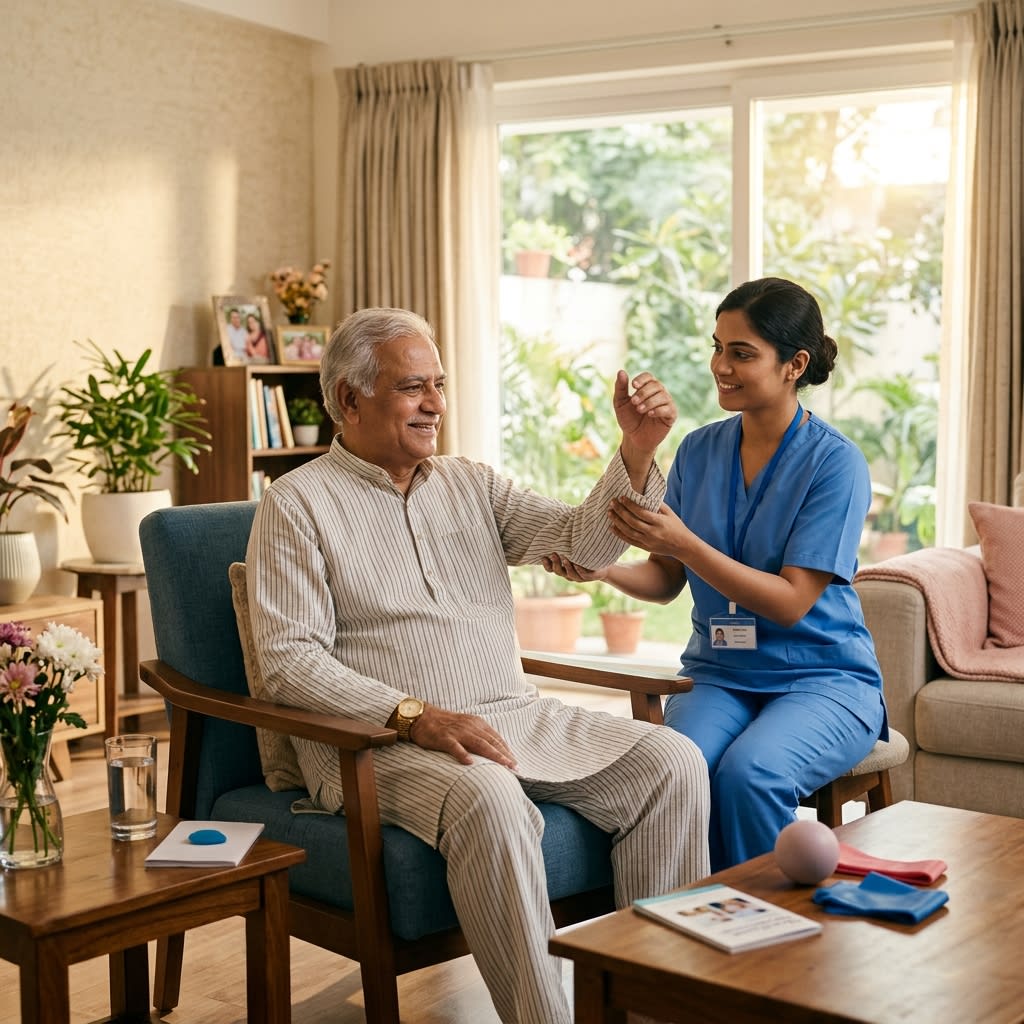
- Passive range-of-motion exercises for the affected limbs (performed by nurse/caregiver)
- Bed positioning to prevent contractures and pressure sores
- Sitting balance exercises – progressing from supported to unsupported sitting
- Deep breathing exercises to prevent pneumonia
Month 2–3 (Active Recovery):
- Active-assisted exercises – patient begins to move affected limbs with help
- Standing balance training with support (parallel bars or walker)
- Weight transfer exercises to prepare for walking
- Hand and finger exercises for fine motor skills
Month 4–6 (Functional Recovery):
- Gait training – walking with assistive devices, progressing to independent walking
- Stair climbing practice
- Daily activity training – dressing, grooming, eating independently
- Strength and endurance building through progressive exercises
2. Speech and Language Therapy
Communication difficulties affect nearly 40% of stroke survivors:
- Aphasia exercises – Word-finding games, picture naming, sentence completion
- Oral motor exercises – Tongue, lip, and jaw strengthening for clearer speech
- Reading and writing practice – Graded exercises from single words to sentences
- Communication aids – Picture boards, apps, and gesture training when speech is severely affected
- Family training – Teaching families how to communicate effectively with the stroke survivor
3. Swallowing Rehabilitation
Dysphagia (swallowing difficulty) can lead to aspiration pneumonia if not managed properly:
- Modified diet textures – pureed, soft, and regular foods introduced progressively
- Thickened liquids to prevent aspiration
- Proper positioning during meals (upright, chin slightly tucked)
- Swallowing exercises prescribed by a speech therapist
- Supervision during meals to prevent choking
4. Medication Management
Post-stroke patients typically require multiple medications:
- Blood thinners – Aspirin, clopidogrel, or warfarin to prevent recurrent stroke
- Antihypertensives – Strict BP control (target: below 130/80 mmHg)
- Statins – Cholesterol management to prevent artery blockage
- Antidiabetic medications – Blood sugar control for diabetic patients
- Antidepressants – If post-stroke depression is diagnosed
- Anti-spasticity drugs – To manage muscle stiffness in affected limbs
5. Preventing Recurrent Stroke
30% of stroke survivors have a second stroke within 5 years. Prevention strategies include:
- Daily BP monitoring (maintain below 130/80 mmHg)
- Blood sugar control (HbA1c below 7%)
- Cholesterol management through diet and medication
- Complete smoking cessation and alcohol avoidance
- Regular follow-up with neurologist (every 3 months in the first year)
6. Emotional and Psychological Support
Post-stroke depression affects up to 33% of survivors:
- Maintain a structured daily routine with achievable goals
- Celebrate small victories and progress milestones
- Encourage social interaction through family visits and video calls
- Join stroke survivor support groups (online or local)
- Professional counselling when depression symptoms are persistent
Home Modifications for Stroke Patients
Making the home safe and accessible is critical:
- Bathroom – Install grab bars, raised toilet seat, shower chair, and anti-slip mats
- Bedroom – Hospital-style bed with adjustable head, bed rails, and call bell
- Doorways – Widen if wheelchair access is needed; remove thresholds
- Stairs – Install handrails on both sides; consider a stairlift for multi-storey homes
- Kitchen – Reorganise frequently used items to accessible heights
How NurseNest Plus Supports Stroke Recovery at Home
Our specialised neurological care programme includes:
- Trained neuro-rehab nurses – Experienced in stroke, paralysis, and brain injury care
- Daily physiotherapy assistance – Supervised exercises as per the physiotherapist's plan
- Medication management – Zero missed doses with detailed tracking
- Vital sign monitoring – BP, blood sugar, pulse, and SpO2 checked multiple times daily
- Positioning and mobility – Turning schedules, transfer techniques, and fall prevention
- Caregiver training – Teaching family members safe handling and exercise techniques
- Doctor coordination – Sharing progress reports and facilitating teleconsultations
NurseNest Plus – Rebuilding Lives After Stroke, One Step at a Time