
Complete Guide to Post-Surgery Home Care: What Families Need to Know in 2026
Karnataka Nursing Council Reg. No. 312786
BSc Nursing · 5+ years Apollo Hospital ICU · BLS/CPR Certified
Medically reviewed by Sumit Kumar, RN
Every year, millions of Indians undergo surgeries ranging from orthopaedic procedures and cardiac bypasses to abdominal operations and cataract surgeries. While hospitals handle the surgical procedure, the real recovery happens at home. Studies show that patients who receive professional home nursing care after surgery recover 40% faster and have significantly lower readmission rates.
At NurseNest Plus Bangalore, we've helped hundreds of families navigate the critical post-surgery recovery phase. Here's your complete guide to post-surgical home care.
Why Post-Surgery Home Care Matters
The first 2–6 weeks after surgery are the most critical. Complications like infections, blood clots, and poor wound healing are most likely during this window. Professional home care addresses:
- Infection prevention – Surgical site infections (SSIs) account for 15–20% of all hospital-acquired infections in India
- Pain management – Proper medication timing and dosage are crucial for comfortable recovery
- Mobility restoration – Early, guided movement prevents complications like DVT (deep vein thrombosis)
- Nutritional support – Post-surgery nutrition directly impacts wound healing speed
Essential Post-Surgery Home Care Steps
1. Wound Care and Dressing
Proper wound management is the cornerstone of post-surgical recovery:
- Change dressings as per the surgeon's schedule (typically daily or every 2 days)
- Always wash hands thoroughly before touching or cleaning the wound area
- Use prescribed antiseptic solutions for wound cleaning
- Watch for signs of infection: increased redness, swelling, pus, warmth, or fever above 100°F
- Keep the surgical site dry – avoid water exposure unless approved by the surgeon
2. Medication Management
Post-surgery patients often have complex medication schedules:
- Antibiotics – Complete the full course; never skip doses even if feeling better
- Pain medications – Take on schedule, not just when pain is unbearable
- Blood thinners – Critical after orthopaedic and cardiac surgeries; timing matters
- Supplements – Iron, calcium, Vitamin D as prescribed for bone healing
A NurseNest Plus home nurse maintains a medication chart and ensures zero missed doses.
3. Physiotherapy and Early Mobilisation
Early movement after surgery significantly reduces complications:
- Begin with gentle bed exercises as approved by the surgeon
- Progress to assisted walking with a walker or support
- Follow the physiotherapy exercise plan strictly
- Avoid lifting heavy weights for 6–8 weeks post-surgery
- A trained home nurse can assist with daily physiotherapy exercises
4. Nutrition for Faster Healing
What you eat directly impacts how fast you heal:
- Protein-rich foods – Eggs, dal, paneer, chicken, fish help tissue repair
- Vitamin C – Amla, citrus fruits, guava boost collagen production
- Iron-rich foods – Spinach, beetroot, dates combat post-surgical anaemia
- Hydration – At least 8–10 glasses of water daily; coconut water is excellent
- Avoid – Processed foods, excessive salt, sugary drinks, and alcohol
5. Monitoring Vital Signs
Regular monitoring catches complications early:
- Temperature check twice daily (morning and evening)
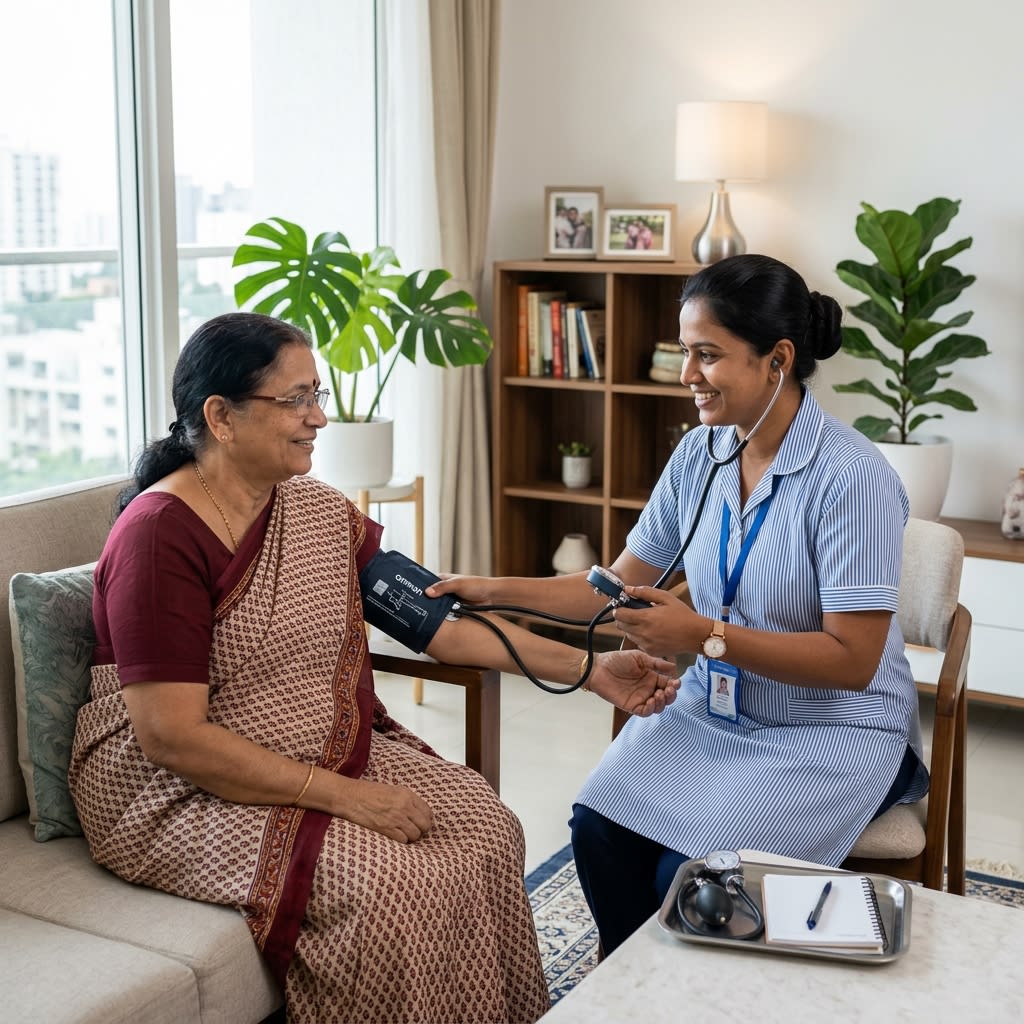
- Blood pressure monitoring for cardiac and major surgery patients
- Pulse oximetry (SpO2) for patients who underwent thoracic/abdominal surgery
- Blood sugar monitoring for diabetic patients (surgery affects glucose levels)
- Urine output tracking for kidney function assessment
6. Emotional Support and Mental Health
Post-surgical depression is common but often overlooked:
- Maintain a positive, encouraging environment at home
- Set realistic recovery milestones to track progress
- Encourage hobbies, reading, music – anything that lifts spirits
- Professional caregivers provide companionship and reduce isolation
When to Call the Doctor Immediately
Seek emergency medical help if you notice any of these signs:
- Fever above 101°F that doesn't respond to paracetamol
- Sudden increase in wound pain, swelling, or discharge
- Difficulty breathing or chest pain
- Severe nausea, vomiting, or inability to keep fluids down
- Leg swelling, redness, or calf pain (signs of blood clot)
- Confusion or altered mental state
How NurseNest Plus Post-Surgery Home Care Works
- Free Assessment – Our nursing coordinator visits your home to assess needs
- Care Plan Design – Customised plan based on the surgery type and surgeon's instructions
- Nurse Assignment – Experienced, verified nurse matched to your requirements
- Daily Care – Wound dressing, medication, vitals, physiotherapy assistance
- Progress Reports – Regular updates to family members and the treating doctor
Book Post-Surgery Home Nursing in Bangalore
Don't risk complications with inexperienced care. NurseNest Plus provides trained home nurses with hospital-grade skills for post-surgical recovery across Bangalore. Our nurses are experienced in orthopaedic, cardiac, abdominal, and neurological post-operative care.
NurseNest Plus – Because Recovery Starts at Home