
Diabetes Management at Home: Expert Tips for Blood Sugar Control in 2026
Karnataka Nursing Council Reg. No. 312786
BSc Nursing · 5+ years Apollo Hospital ICU · BLS/CPR Certified
Medically reviewed by Sumit Kumar, RN
India is the diabetes capital of the world, with over 101 million people currently living with diabetes and another 136 million in the pre-diabetic stage. By 2026, healthcare experts have identified home-based diabetes management as one of the most effective strategies for controlling blood sugar, reducing complications, and improving quality of life.
At NurseNest Plus, our trained nurses help diabetic patients across Bangalore manage their condition effectively from the comfort of their homes. Here is your comprehensive guide to diabetes management at home.
Understanding Diabetes: Type 1 vs Type 2
Before diving into management strategies, it's important to understand the two main types:
- Type 1 Diabetes – The body doesn't produce insulin. Requires daily insulin injections. Usually diagnosed in younger patients.
- Type 2 Diabetes – The body doesn't use insulin properly. Most common form (90% of cases). Often linked to lifestyle, diet, and genetics.
Both types require consistent daily management, which is where professional home nursing plays a critical role.
The 5 Pillars of Home Diabetes Management
1. Blood Sugar Monitoring
Regular monitoring is the foundation of diabetes control:
- Fasting blood sugar (FBS) – Check every morning before breakfast (target: 80–130 mg/dL)
- Post-meal blood sugar (PPBS) – Check 2 hours after meals (target: below 180 mg/dL)
- HbA1c test – Get this lab test every 3 months (target: below 7%)
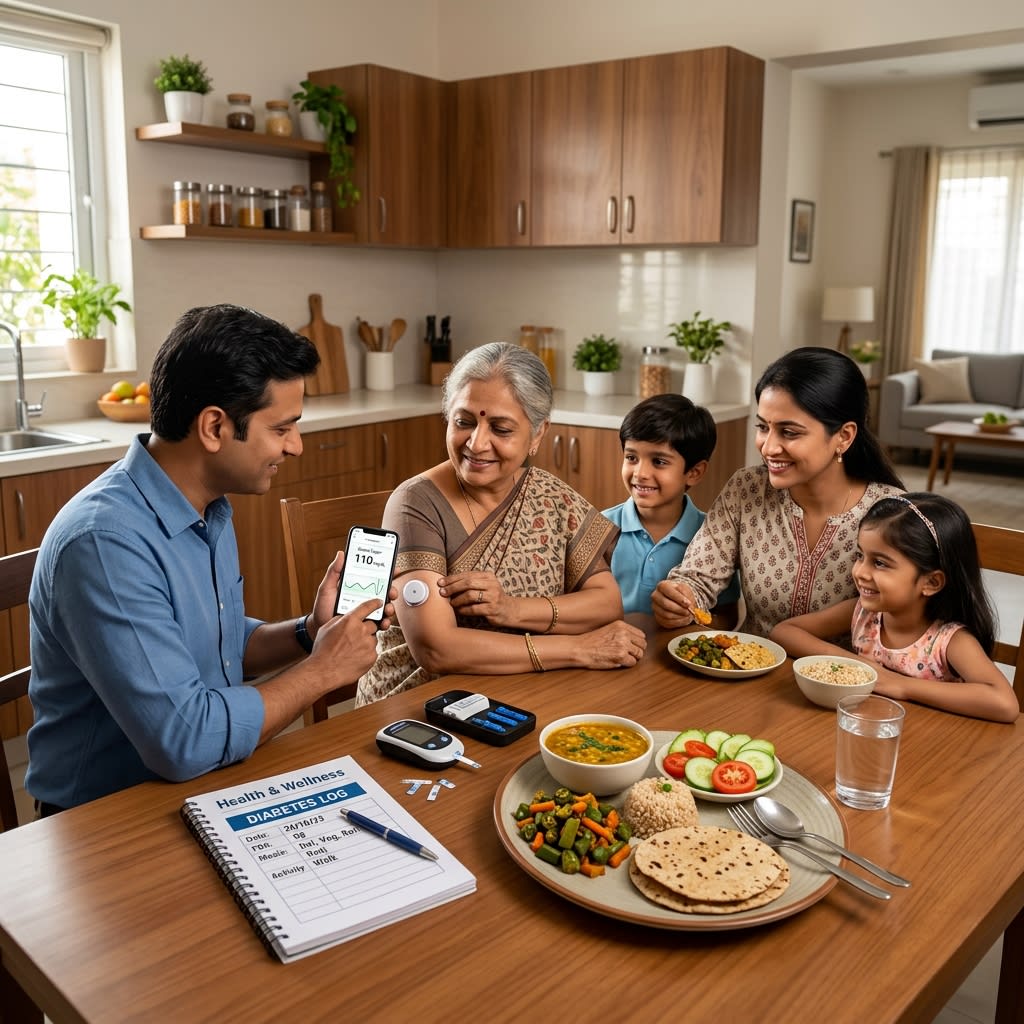
- Continuous Glucose Monitors (CGMs) – Wearable devices now available in India that track blood sugar 24/7
A NurseNest Plus home nurse can assist with daily glucose monitoring, maintain a log book, and identify patterns that need doctor attention.
2. Indian-Friendly Diabetes Diet Plan
Food is medicine for diabetics. Here's an Indian-specific diet plan:
Foods to Include:
- Whole grains – Ragi (finger millet), jowar, bajra, oats instead of white rice
- Vegetables – Bitter gourd (karela), fenugreek (methi), spinach, broccoli, okra
- Proteins – Dal, paneer, eggs, chicken breast, fish (grilled/steamed)
- Healthy fats – Almonds, walnuts, flax seeds, olive oil
- Spices – Turmeric, cinnamon, fenugreek seeds (proven to lower blood sugar)
Foods to Avoid:
- White rice (replace with brown rice or cauliflower rice)
- Sugary drinks, fruit juices (even "natural" ones)
- Maida products – white bread, naan, biscuits
- Processed snacks and deep-fried food
- Mangoes, bananas, and grapes in large quantities
3. Exercise and Physical Activity
Regular exercise improves insulin sensitivity by up to 40%:
- Walking – 30 minutes of brisk walking, 5 days a week
- Yoga – Asanas like Vajrasana (after meals), Surya Namaskar, and Pranayama
- Resistance training – Light weights or resistance bands, 2–3 times per week
- Post-meal walks – Even a 10-minute walk after each meal significantly lowers PPBS
Important: For elderly diabetic patients or those with complications, exercise should be guided by a professional. NurseNest Plus nurses can assist with safe, supervised home exercises.
4. Medication and Insulin Management
Proper medication timing is critical for blood sugar control:
- Take oral medications at the same time daily
- Store insulin properly (2–8°C in refrigerator, never freeze)
- Rotate insulin injection sites to prevent lipodystrophy
- Never adjust dosage without consulting your endocrinologist
- Keep a glucagon emergency kit at home for severe hypoglycaemia
5. Foot Care – The Most Neglected Aspect
Diabetic foot complications are a leading cause of amputations in India:
- Inspect feet daily for cuts, blisters, redness, or swelling
- Wash feet with lukewarm water daily; dry thoroughly between toes
- Moisturise feet (but not between toes)
- Wear comfortable, well-fitting footwear – avoid walking barefoot
- Trim nails straight across; avoid cutting corners
- A home nurse can perform daily foot inspections and catch problems early
Warning Signs: When to Seek Immediate Medical Help
- Blood sugar above 300 mg/dL or below 70 mg/dL
- Fruity-smelling breath (sign of diabetic ketoacidosis)
- Excessive thirst, frequent urination, and unexplained weight loss
- Blurred vision or sudden vision changes
- Non-healing wounds or ulcers on feet
- Numbness or tingling in hands and feet
Technology in Diabetes Home Care – What's New in 2026
Modern technology is making home diabetes management easier than ever:
- Smart glucose monitors – Sync with smartphone apps for real-time tracking
- AI-powered meal planners – Apps that calculate glycaemic impact of Indian meals
- Telehealth consultations – Video calls with endocrinologists from home
- Insulin pens and pumps – More affordable options now available in India
- Wearable health bands – Track activity, heart rate, and sleep quality
Why Choose NurseNest Plus for Diabetes Home Care?
Our trained nurses specialise in chronic disease management and provide:
- Daily blood sugar monitoring and medication management
- Customised diet guidance based on Indian cuisine
- Foot care and wound management for diabetic patients
- Insulin administration and storage guidance
- Coordination with your endocrinologist for treatment updates
NurseNest Plus – Managing Diabetes, One Day at a Time