
Managing Hypertension at Home: A Practical Guide to Blood Pressure Control in India
Karnataka Nursing Council Reg. No. 312786
BSc Nursing · 5+ years Apollo Hospital ICU · BLS/CPR Certified
Medically reviewed by Sumit Kumar, RN
Hypertension – the "silent killer" – affects an estimated 220 million Indians, making it the single largest risk factor for heart attack, stroke, kidney failure, and vision loss in the country. What makes hypertension particularly dangerous is that most people have no symptoms until a catastrophic event occurs.
The good news? Hypertension is highly manageable at home with the right combination of lifestyle changes, medication adherence, and regular monitoring. At NurseNest Plus, our nurses help patients across Bangalore maintain optimal blood pressure control from the comfort of their homes.
Understanding Blood Pressure Numbers
Blood pressure is expressed as two numbers (e.g., 120/80 mmHg):
- Systolic (top number) – Pressure when the heart beats and pumps blood
- Diastolic (bottom number) – Pressure when the heart rests between beats
Blood Pressure Categories (AHA/Indian Guidelines):
- Normal: Below 120/80 mmHg
- Elevated: 120–129 / below 80 mmHg
- Stage 1 Hypertension: 130–139 / 80–89 mmHg
- Stage 2 Hypertension: 140+ / 90+ mmHg
- Hypertensive Crisis: Above 180/120 mmHg – seek emergency care immediately
The DASH Diet: Indian-Adapted Version
The DASH (Dietary Approaches to Stop Hypertension) diet is scientifically proven to lower BP by 8–14 mmHg. Here's an Indian-adapted version:
Foods to Include Generously:
- Vegetables – Spinach, lauki (bottle gourd), beetroot, carrots, drumstick, broccoli (5+ servings daily)
- Fruits – Banana (rich in potassium), pomegranate, watermelon, papaya, guava
- Whole grains – Ragi, jowar, bajra, oats, brown rice instead of white rice
- Low-fat dairy – Buttermilk (chaas), low-fat curd, paneer in moderation
- Lean proteins – Dal, sprouts, eggs, chicken breast, fish (steamed/grilled)
- Nuts and seeds – Almonds, walnuts, flax seeds, sunflower seeds (unsalted)
- Spices – Garlic (2 cloves daily), turmeric, cinnamon, cardamom – all shown to help lower BP
Foods to Strictly Limit or Avoid:
- Salt (sodium) – Maximum 5g per day (1 teaspoon). Avoid pickles, papad, packaged snacks
- Processed foods – Instant noodles, ready-to-eat meals, canned soups
- Fried foods – Pakoras, samosas, puris – use air frying or baking instead
- Sugar – Reduce sweets, sugary drinks, and desserts
- Alcohol – Limit or completely avoid; alcohol directly raises BP
- Caffeine – Maximum 2 cups of tea/coffee daily
Exercise for Blood Pressure Control
Regular exercise can lower systolic BP by 5–8 mmHg:
Recommended Activities:
- Brisk walking – 30 minutes daily, 5 days a week (the gold standard for BP control)
- Swimming – Excellent for seniors with joint problems
- Cycling – Stationary cycling at home for 20–30 minutes
- Yoga – Shavasana, Sukhasana, Pranayama (breathing exercises) particularly effective
- Light resistance training – 2–3 times per week with light weights
Exercise Safety for Hypertensive Patients:
- Never exercise if BP is above 180/110 mmHg
- Avoid heavy lifting and straining exercises
- Warm up for 5 minutes before and cool down for 5 minutes after
- Stay hydrated but avoid excessive water intake during exercise
- Stop immediately if you feel chest pain, dizziness, or severe shortness of breath
Home Blood Pressure Monitoring: The Right Way
Self-monitoring is one of the most powerful tools for BP management:
How to Take Accurate Readings:
- Sit quietly for 5 minutes before measuring (no talking, no phone)
- Sit with feet flat on the floor, back supported, arm at heart level
- Use a validated upper-arm monitor (not wrist monitors)
- Take 2 readings, 1 minute apart; record the average
- Measure at the same time each day (morning before medication and evening)
- Don't measure after exercise, caffeine, or smoking
- Keep a BP diary or use a smartphone app to track trends
When to Alert Your Doctor:
- BP consistently above 140/90 mmHg despite medication
- Sudden spike above 180/120 mmHg (hypertensive crisis)
- Symptoms: severe headache, vision changes, chest pain, difficulty breathing
- Dizziness or fainting (BP may be too low – medication adjustment needed)
Medication Adherence: The Biggest Challenge
Studies show that 50% of hypertensive patients in India stop taking medications within a year. Common reasons and solutions:
- "I feel fine, so I stopped" – Hypertension has no symptoms; medication prevents future heart attacks and strokes
- "It causes side effects" – Talk to your doctor about alternatives; never stop without medical advice
- "I forget to take it" – Use pill organisers, smartphone alarms, or a home nurse who ensures timely doses
- "It's too expensive" – Generic medications work equally well; discuss affordable alternatives with your doctor
How NurseNest Plus Helps Manage Hypertension at Home
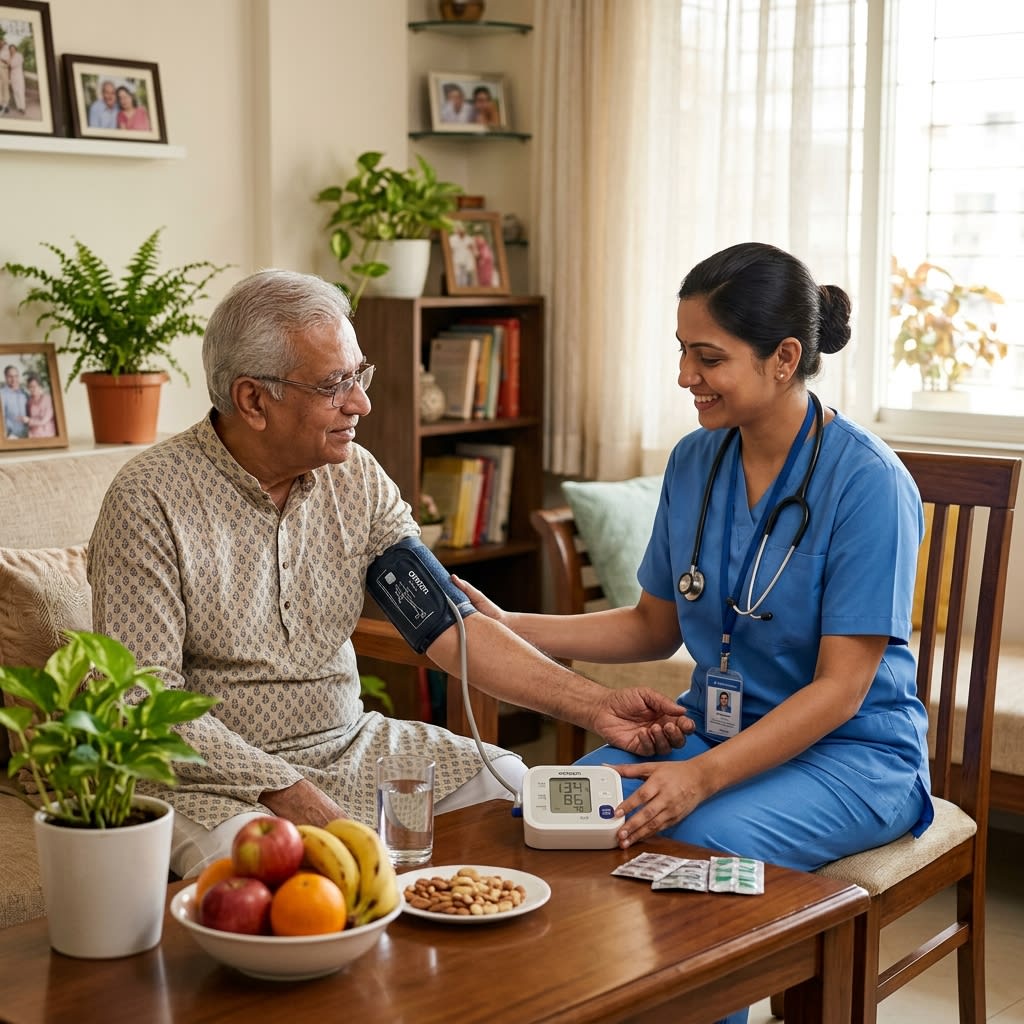
- Daily BP monitoring – Accurate readings at consistent times, recorded and tracked
- Medication management – Ensuring all medicines are taken on time, every time
- Diet supervision – Helping prepare or guide low-sodium, heart-healthy meals
- Exercise assistance – Supervised walking and light exercises for elderly patients
- Doctor coordination – Sharing BP trends and medication responses with the treating physician
- Emergency recognition – Trained to identify hypertensive emergencies and respond appropriately
NurseNest Plus – Keeping Your Heart Healthy, One Heartbeat at a Time