
Dengue Prevention and Home Nursing Care During Monsoon: Protect Your Family in Bangalore
Karnataka Nursing Council Reg. No. 312786
BSc Nursing · 5+ years Apollo Hospital ICU · BLS/CPR Certified
Medically reviewed by Sumit Kumar, RN
Every monsoon, Bangalore witnesses a sharp spike in dengue fever cases. In 2025, Karnataka reported over 25,000 dengue cases, with Bangalore contributing nearly 40% of them. The Aedes aegypti mosquito that transmits dengue breeds prolifically in stagnant water during the rainy season, putting every household at risk.
At NurseNest Plus, our home nursing professionals provide critical support during the dengue season – from prevention education to monitoring platelet counts and managing recovery at home.
Understanding Dengue: What Every Bangalore Family Must Know
How Dengue Spreads
- Transmitted through the bite of the Aedes aegypti mosquito
- These mosquitoes bite primarily during dawn (6–8 AM) and dusk (4–7 PM)
- They breed in clean stagnant water – not dirty drains, but flower pots, cooler trays, discarded tyres, and water-filled containers
- A single infected mosquito can transmit dengue to multiple people
- There are 4 serotypes of dengue virus (DENV-1 to DENV-4); infection with one doesn't protect against others
- Second dengue infection carries a higher risk of severe dengue (dengue haemorrhagic fever)
Dengue Symptoms: The Three Phases
Phase 1: Febrile Phase (Day 1–3)
- Sudden high fever (39–40°C / 102–104°F)
- Severe headache, especially behind the eyes (retro-orbital pain)
- Intense body and joint pain ("breakbone fever")
- Muscle pain, fatigue, and malaise
- Nausea, vomiting, and loss of appetite
- Skin rash (may appear on day 2–3)
Phase 2: Critical Phase (Day 4–6) ⚠️
This is the most dangerous period – paradoxically, the fever drops but complications can arise:
- Platelet count drops significantly (normal: 1.5–4 lakh; dengue can drop below 20,000)
- Risk of plasma leakage leading to fluid accumulation in abdomen and lungs
- Warning signs of severe dengue (see emergency section below)
- This phase requires closest monitoring – even patients who "feel better" need observation
Phase 3: Recovery Phase (Day 7–10)
- Platelet count begins to recover
- Appetite returns gradually
- Rash may reappear with itching
- Fatigue may persist for 2–4 weeks
- Caution: Fluid overload can occur if IV fluids are continued unnecessarily during recovery
Dengue Prevention: The Complete Home Protection Guide
1. Eliminate Mosquito Breeding Sites (Source Reduction)
This is the single most effective prevention strategy:
- Empty, scrub, and dry all water-collecting containers weekly – flower pots, pot saucers, bird baths, pet bowls
- Cover overhead water tanks with tight-fitting lids
- Turn over or remove unused pots, buckets, and tyres that collect rainwater
- Clean cooler trays every week; add a few drops of kerosene or larvicide if water must be stored
- Clear roof gutters and drains – clogged drains create perfect breeding pools
- Check air conditioner drip trays – often overlooked breeding site
- Maintain dry balconies – no standing water in any container
2. Personal Protection Measures
- Wear full-sleeved shirts and long pants, especially during dawn and dusk
- Use DEET or picaridin-based mosquito repellent on exposed skin (safe for adults and children above 2 years)
- Install window and door screens (mesh size below 1.2mm)
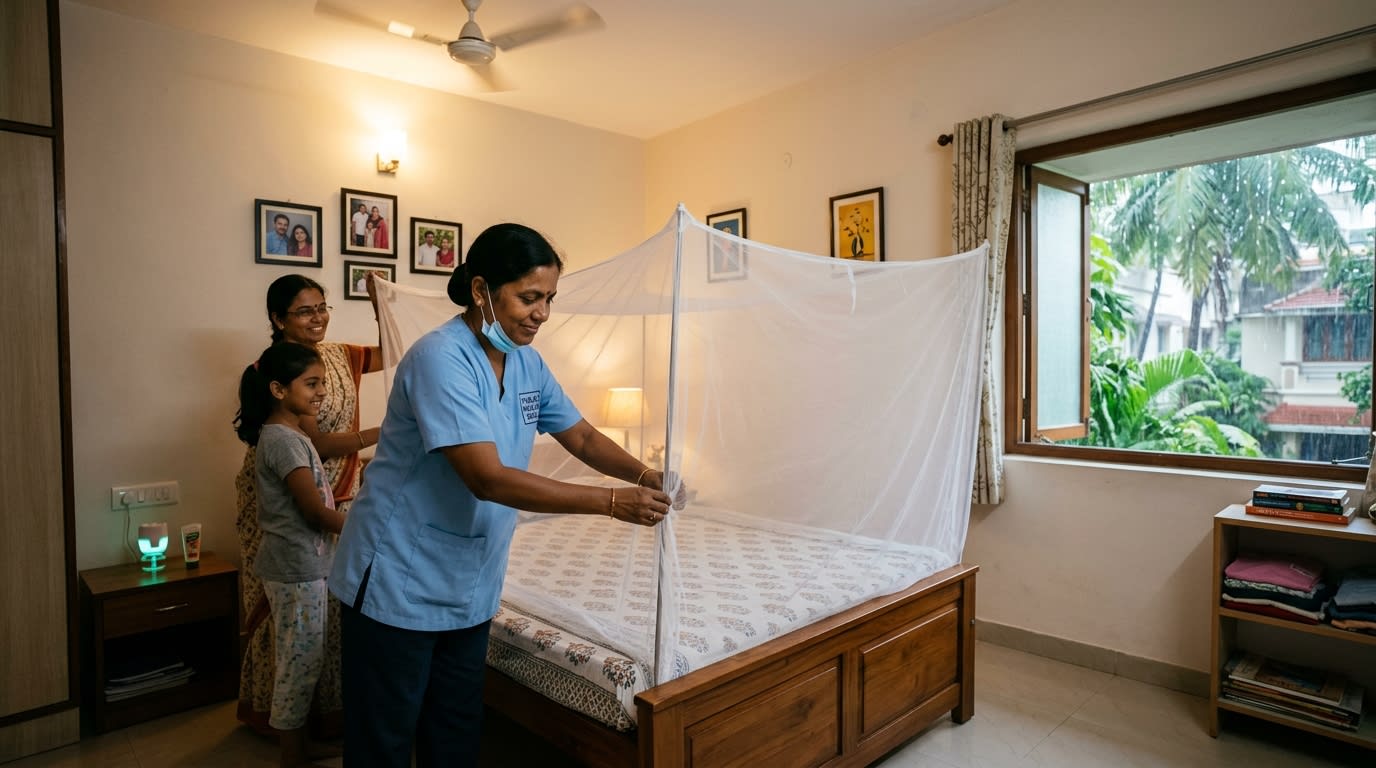
- Use mosquito nets – especially for infants, elderly, and daytime sleepers
- Use electric mosquito vaporisers (liquid or mat type) in bedrooms
- Avoid dark-coloured clothing – Aedes mosquitoes are attracted to dark colours
3. Community Prevention
- Coordinate with your apartment association for regular fogging and larvicide spraying
- Report stagnant water complaints to BBMP vector control
- Participate in community clean-up drives
- Educate domestic help and security staff about breeding site elimination
Home Care for Dengue Patients
Most dengue cases (80–85%) can be managed at home with proper monitoring. Here's the protocol:
Hydration Is Key
- Drink at least 3–4 litres of fluids daily
- Best options: ORS (oral rehydration solution), coconut water, lime water with salt and sugar, buttermilk
- Avoid: Coffee, tea (diuretics), carbonated drinks, and alcohol
- Monitor urine output – at least 4–6 times daily; dark-coloured urine means insufficient hydration
Fever and Pain Management
- Use only Paracetamol (Crocin/Dolo) for fever – maximum 4g per day for adults
- ⚠️ NEVER use Aspirin, Ibuprofen (Brufen), or Diclofenac – these can cause fatal bleeding in dengue
- Tepid sponging with lukewarm water to bring down fever
- Light, comfortable cotton clothing
Nutrition During Dengue
- Papaya leaf extract – Multiple studies show it helps increase platelet count (crush fresh leaves, extract juice, 2 tablespoons twice daily)
- Pomegranate juice – Rich in iron and helps with platelet recovery
- Goat milk – Traditional remedy with some evidence for platelet support
- Kiwi fruit – High in vitamin C and may support platelet production
- Protein-rich foods – Moong dal, eggs, chicken soup for strength and recovery
- Avoid oily, spicy, and heavy foods during the febrile phase
Daily Monitoring Checklist
- Temperature check every 4–6 hours
- Fluid intake tracking (aim for 3+ litres)
- Urine output monitoring
- Watch for warning signs (bleeding, abdominal pain, persistent vomiting)
- Blood tests – CBC with platelet count on Day 3, 5, and 7 (or as advised by doctor)
Warning Signs – Rush to Hospital Immediately
- 🚨 Severe abdominal pain or tenderness
- 🚨 Persistent vomiting (3+ episodes in 24 hours)
- 🚨 Bleeding from gums, nose, or blood in vomit/stool
- 🚨 Platelet count below 20,000
- 🚨 Difficulty breathing or chest pain
- 🚨 Cold, clammy skin with rapid pulse (sign of shock)
- 🚨 Sudden drop in temperature with excessive sweating
- 🚨 Restlessness, confusion, or excessive drowsiness
NurseNest Plus Dengue Home Care Services
Our specialised monsoon health nursing programme includes:
- Vital sign monitoring – Temperature, BP, pulse, and hydration status tracked every 4 hours
- Platelet count coordination – Arranging home blood tests and interpreting results
- Hydration management – Ensuring adequate oral fluid intake; recognising when IV fluids may be needed
- Medication management – Correct Paracetamol dosing; preventing dangerous NSAID use
- Warning sign surveillance – Trained to detect early signs of severe dengue
- Nutritional support – Preparing platelet-boosting foods and managing appetite loss
- Doctor coordination – Direct communication with treating physician; facilitating hospital transfer if critical
- Family education – Teaching household members about mosquito prevention and caretaking protocols
NurseNest Plus – Your Shield Against Dengue, Right at Your Doorstep