
Dengue Prevention and Home Care: A Complete Guide for Indian Families
Karnataka Nursing Council Reg. No. 312786
BSc Nursing · 5+ years Apollo Hospital ICU · BLS/CPR Certified
Medically reviewed by Sumit Kumar, RN
As Bangalore and other Indian cities enter the monsoon season of 2026, dengue fever cases are once again surging. According to recent health reports, India records over 1 lakh dengue cases annually, with the monsoon months of June–October accounting for 70% of all infections. Early prevention and proper home care can make the difference between a mild illness and a life-threatening emergency.
Understanding Dengue: What Every Indian Family Should Know
Dengue is a viral infection spread by the Aedes aegypti mosquito, which breeds in clean, stagnant water. Unlike malaria mosquitoes, Aedes mosquitoes:
- Bite primarily during daytime (early morning and late afternoon)
- Breed in clean standing water (flower pots, coolers, tyres, water tanks)
- Can fly only about 200 metres, meaning they breed near your home
- Have distinctive black and white striped legs
Dengue Symptoms: The Three Phases
Phase 1: Febrile Phase (Days 1–3)
- Sudden high fever (104°F / 40°C)
- Severe headache, especially behind the eyes
- Muscle and joint pain (called "breakbone fever")
- Nausea, vomiting, and loss of appetite
- Skin rash may appear
Phase 2: Critical Phase (Days 4–6) ⚠️
- Fever may drop – this is NOT a sign of improvement
- Abdominal pain and persistent vomiting
- Bleeding from gums, nose, or under skin (petechiae)
- Platelet count drops rapidly
- This is when most complications occur – hospital care may be needed
Phase 3: Recovery Phase (Days 7–10)
- Fever subsides, appetite returns
- Platelet count begins to rise
- Patient may feel itchy rash – this is normal recovery
- Fatigue may last 2–4 weeks
Dengue Prevention: 10 Proven Strategies
Home and Surroundings
- Eliminate stagnant water – Empty flower pot trays, AC drip trays, and cooler tanks weekly
- Cover water storage – Use tight-fitting lids on all water containers, tanks, and drums
- Clean drains regularly – Ensure no water pools around your home
- Use larvicides – Add temephos granules to water that cannot be drained
- Maintain surroundings – Trim overgrown vegetation and bushes near windows
Personal Protection
- Wear protective clothing – Full-sleeved shirts and long pants, especially during dawn and dusk
- Apply mosquito repellent – Use DEET, picaridin, or oil of lemon eucalyptus on exposed skin
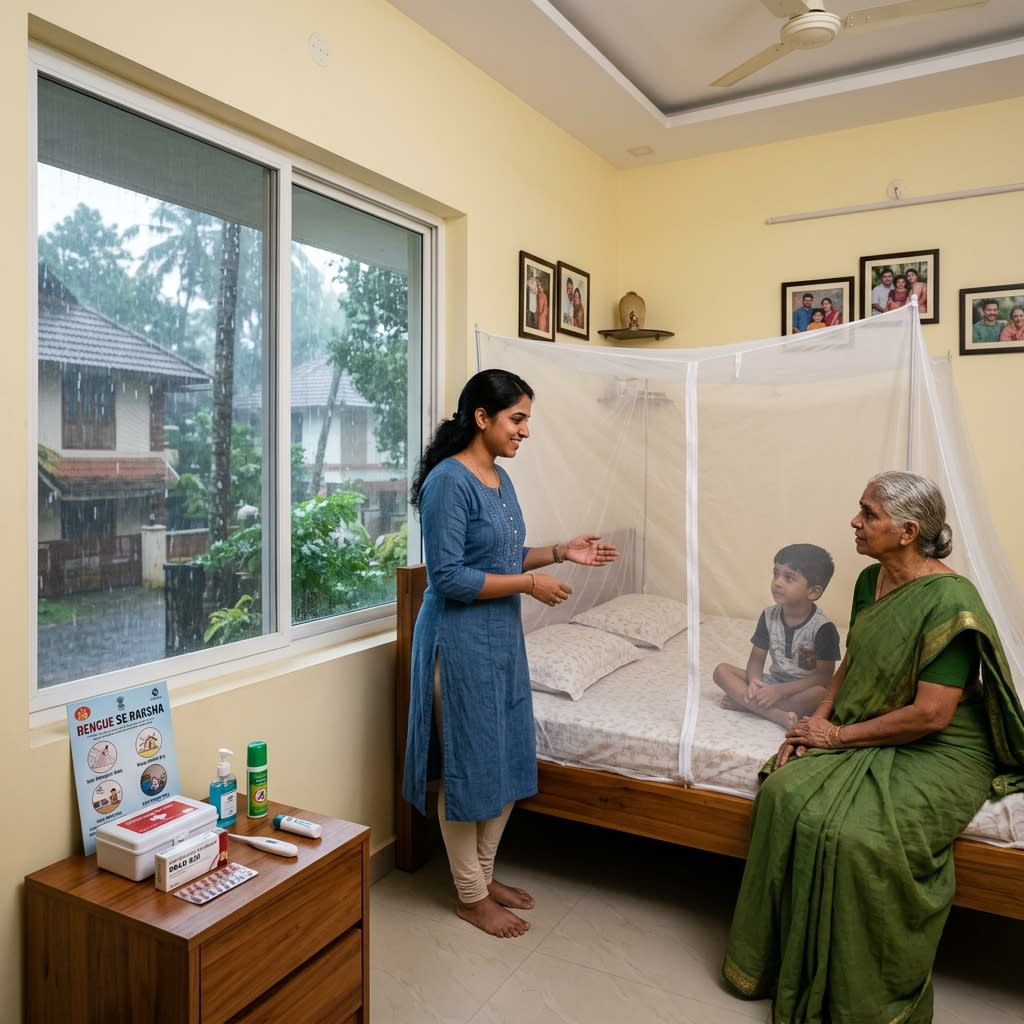
- Use mosquito nets – Essential for infants, elderly, and bedridden patients
- Install window screens – Fine mesh screens prevent mosquito entry
- Use electric mosquito bats/vaporisers – Chemical-free options for indoor protection
Dengue Home Care: What to Do If Someone Gets Dengue
Home Care Protocol (for Mild Cases)
- Hydration is KEY – ORS solution, coconut water, buttermilk, glucose water, fresh fruit juices
- Paracetamol ONLY for fever – NEVER give aspirin, ibuprofen, or any NSAID (these increase bleeding risk)
- Rest completely – Bed rest with minimal physical activity
- Monitor platelet count – Get CBC (Complete Blood Count) done daily from Day 3 onwards
- Track fluid intake and urine output – At least 6–8 glasses of fluids daily
- Tepid sponging – Use lukewarm water sponge baths for high fever (not cold water)
Papaya Leaf Extract – Does It Work?
Studies from multiple Indian medical institutions suggest that papaya leaf extract may help increase platelet count. While not a substitute for medical treatment:
- Crush fresh papaya leaves and extract the juice
- Take 2 tablespoons twice daily
- Always consult your doctor before trying home remedies
When to Rush to the Hospital 🚨
Seek emergency medical care immediately if the patient shows:
- Persistent vomiting (3+ times in 24 hours)
- Severe abdominal pain
- Bleeding from gums, nose, or blood in urine/stool
- Platelet count below 50,000
- Restlessness, cold/clammy skin, or rapid pulse
- Difficulty breathing
- No urine output for 6+ hours
How NurseNest Plus Helps During Dengue Recovery
Our professional home nurses provide crucial support during dengue recovery:
- Vital sign monitoring – Temperature, BP, pulse rate every 4–6 hours
- Hydration management – Ensuring adequate fluid intake and tracking urine output
- Medication administration – Correct dosage and timing of prescribed medicines
- Sample coordination – Arranging daily blood tests at home for platelet monitoring
- Doctor communication – Sharing patient status with treating physician for timely decisions
- Family education – Teaching family members how to continue care safely
NurseNest Plus – Your Health Guardian During Monsoon Season