Post-COVID and Long-Term Respiratory Recovery Care at Home: What Indian Families Need to Know
Karnataka Nursing Council Reg. No. 312786
BSc Nursing · 5+ years Apollo Hospital ICU · BLS/CPR Certified
Medically reviewed by Sumit Kumar, RN
As India continues to navigate waves of COVID-19 variants and seasonal respiratory infections in 2026, a growing number of patients face persistent symptoms that last weeks or months after the acute infection has cleared. Known as Long COVID or Post-COVID Syndrome, this condition affects an estimated 10–30% of all COVID survivors and can significantly impact quality of life.
Beyond COVID, seasonal respiratory infections including H1N1 influenza, H3N2, and severe pneumonia also leave patients needing extended home recovery care. At NurseNest Plus Bangalore, our nurses provide specialised respiratory and recovery support to help patients regain their strength and health.
Understanding Post-COVID and Long-Term Respiratory Symptoms
Symptoms that persist beyond 4 weeks after COVID or severe respiratory infection include:
Physical Symptoms:
- Persistent fatigue – Exhaustion that doesn't improve with rest (affects 80% of long-COVID patients)
- Breathlessness – Difficulty breathing during normal activities like walking or climbing stairs
- Chronic cough – Dry or productive cough lasting weeks after infection
- Chest pain – Tightness or discomfort in the chest area
- Joint and muscle pain – Generalised body aches without clear cause
- Palpitations – Rapid or irregular heartbeat, especially on exertion
Neurological Symptoms:
- Brain fog – Difficulty concentrating, memory problems, confusion
- Headaches – Persistent or recurrent headaches
- Sleep disturbances – Insomnia or excessive sleepiness
- Anxiety and depression – Worsened or new-onset mental health symptoms
Home Recovery Programme: The 5-Pillar Approach
Pillar 1: Breathing Rehabilitation
Rebuilding lung capacity is the top priority for respiratory recovery:
Diaphragmatic Breathing (Belly Breathing):
- Lie on your back with knees bent, one hand on chest and one on abdomen
- Breathe in slowly through the nose for 4 seconds – the belly should rise (not the chest)
- Exhale slowly through pursed lips for 6 seconds – the belly should fall
- Repeat 10 times, 3–4 times daily
Pursed Lip Breathing:
- Breathe in through the nose for 2 counts
- Pucker lips as if blowing a candle
- Breathe out slowly for 4 counts through pursed lips
- Practice during activities that cause breathlessness
Incentive Spirometry:
- Use the spirometer device 10 times every hour while awake
- Breathe in slowly and deeply; try to raise the ball/piston as high as possible
- Hold the breath for 3–5 seconds, then exhale slowly
- Track daily improvement in lung capacity
Prone Positioning (Proning):
- Lie on your stomach for 30 minutes to 2 hours at a time
- Helps improve oxygen distribution in the lungs
- Use pillows under the chest and pelvis for comfort
- Recommended for patients with persistent low SpO2
Pillar 2: Activity Pacing and Energy Management
Post-COVID fatigue requires a strategic approach to activity:
- The 3 P's: Plan, Pace, and Prioritise activities throughout the day
- Break activities into small chunks – Instead of 30 minutes of continuous activity, do 3 sets of 10 minutes with rest breaks
- Graded exercise therapy – Start with 5 minutes of walking, increase by 1–2 minutes every few days
- Track your energy – Rate your energy on a 1–10 scale; stop before reaching exhaustion
- Avoid "boom and bust" – Don't overdo it on good days; maintain consistent, moderate activity levels
Pillar 3: Nutrition for Recovery
Proper nutrition accelerates healing and rebuilds immune strength:
- Protein-rich foods – Eggs, paneer, dal, chicken, fish (at least 1g protein per kg body weight daily)
- Anti-inflammatory foods – Turmeric (haldi), ginger, garlic, green leafy vegetables, berries
- Vitamin C sources – Amla, orange, guava, lemon for immune support
- Vitamin D – Sun exposure (15 minutes daily) and supplements as prescribed
- Zinc-rich foods – Pumpkin seeds, chickpeas, cashews for immune function
- Hydration – At least 2.5–3 litres of water daily; warm water with honey and ginger is soothing
- Avoid – Processed foods, excessive sugar, alcohol, and smoking
Pillar 4: Monitoring and Red Flags
Regular monitoring catches complications early:
Daily Monitoring Checklist:
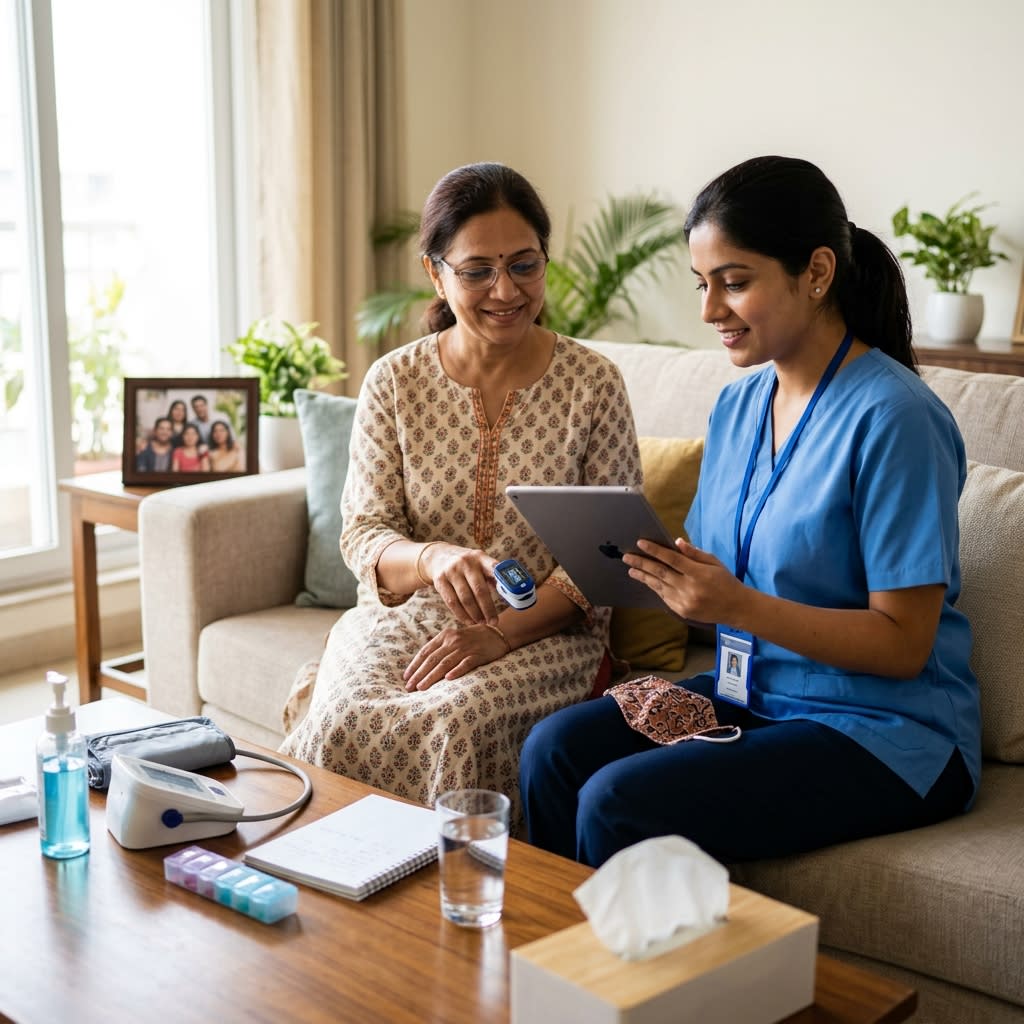
- SpO2 (pulse oximetry) – 3 times daily at rest; target: above 95%
- Temperature – Twice daily; alert if above 100.4°F
- Heart rate – Should be below 100 bpm at rest
- Blood pressure – Daily for patients with hypertension
- Symptom diary – Track fatigue levels, breathlessness, cough severity, and sleep quality
Seek Immediate Medical Attention If:
- SpO2 drops below 92% at rest
- New or worsening chest pain
- Sudden severe breathlessness
- Fever above 101°F returning after being fever-free
- Confusion, persistent dizziness, or fainting
- Coughing up blood
- Leg swelling or pain (possible blood clot)
Pillar 5: Mental Health and Emotional Recovery
The psychological impact of prolonged illness is significant:
- Anxiety about health is extremely common after COVID/respiratory illness
- Depression from prolonged isolation, inability to work, and persistent symptoms
- PTSD from ICU experiences or severe illness episodes
- Maintain social connections through phone calls and video calls
- Practice mindfulness and relaxation techniques daily
- Seek professional counselling if symptoms persist beyond 2 weeks
How NurseNest Plus Supports Respiratory Recovery at Home
- SpO2 and vital monitoring – Regular tracking with immediate physician alerts for concerning trends
- Breathing exercise supervision – Guided practice of spirometry, proning, and pulmonary rehabilitation
- Medication management – Inhalers, steroids, anticoagulants administered as prescribed
- Oxygen therapy management – For patients on home oxygen, ensuring proper flow rates and equipment maintenance
- Nutritional support – High-protein, immune-boosting meal guidance
- Activity pacing – Supervised graded exercise and energy management
- Doctor coordination – Sharing daily progress reports and facilitating teleconsultations
NurseNest Plus – Breathe Easy, Recover Strong, at the Comfort of Your Home