
Caregiver Burnout: Recognising the Signs and When Your Family Needs Professional Home Nursing Help
Karnataka Nursing Council Reg. No. 312786
BSc Nursing · 5+ years Apollo Hospital ICU · BLS/CPR Certified
Medically reviewed by Sumit Kumar, RN
In India, over 80% of elderly and chronically ill patient care is provided by family members – usually daughters, daughters-in-law, or spouses. While caregiving is an act of deep love and cultural duty, the physical, emotional, and financial toll it takes is immense and often invisible.
Caregiver burnout is a state of physical, emotional, and mental exhaustion that occurs when caregivers don't get the help they need or try to do more than they are able – physically or financially. It's not a sign of weakness; it's a natural consequence of sustained, demanding, unpaid labour.
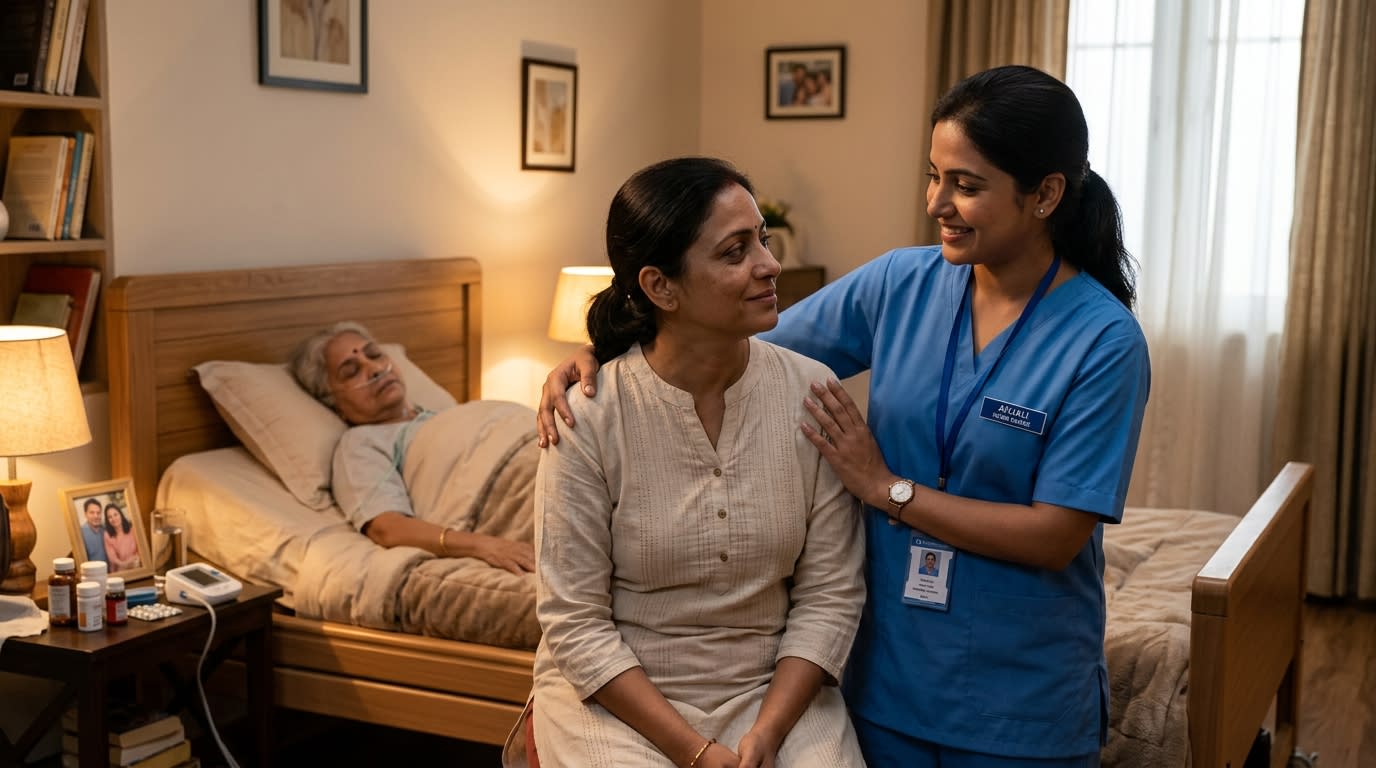
At NurseNest Plus, we've worked with hundreds of Bangalore families where the caregiver was as much in need of help as the patient. Here's how to recognise the signs and take action before it's too late.
The Hidden Crisis: India's Family Caregivers
The statistics paint a sobering picture:
- 72% of family caregivers report declining health since they began caregiving
- 40% of caregivers experience clinical depression – higher than the general population
- 35% of women caregivers in India have quit jobs or reduced work hours to provide care
- The average family caregiver provides 24+ hours per week of unpaid care – many provide 24/7 care
- Spousal caregivers over age 60 have a 63% higher mortality rate than non-caregivers of the same age
Recognising Caregiver Burnout: 15 Warning Signs
Physical Signs
- Constant fatigue and exhaustion – even after sleeping
- Frequent illnesses – colds, infections, body aches (immune system weakening)
- Significant weight loss or gain due to stress eating or skipping meals
- Chronic back pain, neck pain, or joint problems from lifting and transferring the patient
- Sleep problems – insomnia, waking multiple times, or sleeping too much
Emotional Signs
- Feeling resentful toward the patient – then feeling guilty about the resentment
- Increased irritability, anger outbursts, or emotional numbness
- Persistent sadness, hopelessness, or crying spells
- Feeling trapped with no way out – "I have no choice"
- Loss of interest in activities and hobbies that previously brought joy
Behavioural Signs
- Withdrawing from friends, family, and social activities
- Neglecting own medical appointments and health needs
- Increasing use of alcohol, sleeping pills, or comfort eating as coping mechanisms
- Losing patience with the patient – speaking harshly, handling roughly
- Fantasising about running away or the patient's death (this is a severe sign – seek help immediately)
Why Caregivers Don't Ask for Help
Indian cultural norms create powerful barriers:
- "It's my duty" – The belief that caring for parents or spouse is a moral obligation that shouldn't be outsourced
- "What will people say?" – Fear of social judgement for hiring outside help ("They've abandoned their parents")
- "Nobody can care like family" – Distrust of professional caregivers and nursing staff
- Financial concerns – Assumption that professional nursing is unaffordable (it's often more affordable than the cost of caregiver health deterioration)
- Guilt – Feeling that needing help means they're failing their loved one
- Lack of awareness – Many families simply don't know that professional home nursing services exist
The Truth: Professional Help Is Not Abandonment, It's Love
Consider this perspective:
- A rested, healthy caregiver provides better care than an exhausted, resentful one
- Professional nurses bring clinical skills that family members don't have – wound care, medication management, emergency response
- When the caregiver falls sick from burnout, who cares for both the patient AND the caregiver?
- Children who see a parent destroyed by caregiving often develop fear and resentment toward ageing
- A professional nurse allows you to be the daughter/son/spouse again – not just the caretaker
Types of Professional Support Available
1. Respite Care (Short-Term Relief)
- A professional nurse takes over for 8–12 hours so the caregiver can rest, run errands, or socialise
- Available for specific days per week (e.g., every Saturday and Sunday)
- Perfect for caregivers who want to maintain their primary role but need regular breaks
- Night duty nursing – allowing the caregiver to get uninterrupted sleep
2. Part-Time Home Nursing (Daily Support)
- A trained nurse visits for 4–8 hours daily
- Handles medical tasks: medication, wound care, vital monitoring, physiotherapy assistance
- Caregiver focuses on emotional support while the nurse handles clinical tasks
- Ideal transition step for families not yet ready for full-time help
3. Full-Time / Live-In Nursing
- 12-hour or 24-hour professional nursing presence
- Comprehensive care including medical tasks, personal hygiene, mobility, nutrition, and companionship
- Family caregiver can maintain their career and personal health
- Best for patients with complex medical needs: post-stroke, dementia, cancer, ventilator-dependent
Self-Care Checklist for Family Caregivers
While you arrange professional support, start taking care of yourself:
- ✅ Accept that you need help – this is strength, not weakness
- ✅ Maintain at least one social connection – weekly phone call, video chat, or coffee with a friend
- ✅ Don't skip your own medical check-ups – your health matters too
- ✅ Exercise for at least 20 minutes daily – even a walk around the block
- ✅ Eat regular, nutritious meals – you can't pour from an empty cup
- ✅ Sleep at least 6 hours – arrange night relief if the patient needs nighttime care
- ✅ Join a caregiver support group – online forums, WhatsApp groups, or local meetups
- ✅ Set boundaries – it's okay to say "I can't do this today"
- ✅ Seek professional counselling if you feel persistently sad, angry, or hopeless
How NurseNest Plus Supports Both Patient and Family
We believe in caring for the entire family ecosystem:
- Flexible care plans – Respite, part-time, or full-time nursing based on your needs and budget
- Caregiver training – Teaching family members safe patient handling, medication management, and self-care techniques
- Seamless transition – Our nurses integrate gently with the family routine, respecting the patient's preferences and family's values
- Regular communication – Daily reports, WhatsApp updates, and weekly family meetings
- Replacement guarantee – If a nurse isn't the right fit, immediate replacement within 24 hours
- Emotional support – Our team understands the emotional complexity of caregiving and provides compassionate guidance
NurseNest Plus – Because Caring for the Caregiver Is Caring for Everyone