
Wound Care and Bedsore Prevention at Home: Essential Nursing Guide for Bedridden Patients
Karnataka Nursing Council Reg. No. 312786
BSc Nursing · 5+ years Apollo Hospital ICU · BLS/CPR Certified
Medically reviewed by Sumit Kumar, RN
Pressure ulcers – commonly known as bedsores – are one of the most serious and preventable complications of being bedridden. In India, studies show that up to 60% of bedridden patients who receive care from untrained family members develop bedsores, compared to less than 5% when cared for by trained nurses. This stark difference highlights why professional wound care and prevention protocols are not optional – they are essential.
At NurseNest Plus Bangalore, our nurses are rigorously trained in evidence-based pressure ulcer prevention and wound management. Not a single patient under our care has developed a severe bedsore – and we intend to keep it that way.
What Causes Bedsores?
Bedsores (pressure ulcers) develop when sustained pressure on the skin reduces blood flow to that area, causing tissue damage and cell death:
- Sustained pressure – Lying or sitting in one position for too long (as little as 2 hours)
- Friction – Skin rubbing against bed sheets during movement or repositioning
- Shear – When the skin moves in one direction while underlying tissue moves in another (e.g., sliding down in bed)
- Moisture – Sweat, urine, or faecal incontinence softens the skin, making it more vulnerable to damage
High-Risk Areas:
- When lying on back: Sacrum (tailbone), heels, back of head, shoulder blades, elbows
- When lying on side: Hip bone (greater trochanter), ankles, knees, ears
- When sitting: Buttocks (ischial tuberosities), back of thighs
The 4 Stages of Bedsores
Stage 1 – Redness (Non-Blanchable Erythema)
- Skin is intact but shows persistent redness that doesn't fade when pressed
- Area may feel warm, firm, or painful
- Reversible with immediate pressure relief and proper care
Stage 2 – Partial Skin Loss
- Shallow open wound with a pink-red wound bed
- May appear as a blister (intact or broken)
- Treatable at home with proper wound care and dressing
Stage 3 – Full Thickness Skin Loss
- Deep wound extending into the fatty tissue below the skin
- May show visible fat but bone, tendon, or muscle is not exposed
- Requires medical intervention – may need specialised wound care products
Stage 4 – Full Thickness Tissue Loss
- Extensive destruction involving muscle, bone, or supporting structures
- Very high risk of infection, sepsis, and osteomyelitis (bone infection)
- Medical emergency – often requires surgical intervention (debridement, skin grafting)
Bedsore Prevention: The Gold Standard Protocol
1. Repositioning Schedule (Most Critical)
- Turn the patient every 2 hours without exception – this is the single most important prevention measure
- Alternate between: lying on back → right side → back → left side
- Use the 30-degree lateral tilt position to redistribute pressure
- When sitting in a wheelchair, shift weight every 15–30 minutes
- Maintain a written turning schedule with timestamps
2. Pressure-Relieving Surfaces
- Air mattress (alternating pressure) – Automatically inflates and deflates cells to redistribute pressure. Highly recommended for all bedridden patients.
- Foam mattress overlays – High-density foam toppers that distribute weight more evenly
- Gel cushions – For wheelchair-bound patients
- Heel elevators – Pillows or specialised boots to keep heels off the mattress
- Avoid donut-shaped cushions – They actually increase pressure around the wound
3. Skin Care and Hygiene
- Daily skin inspection – Check all pressure points for redness, warmth, or breakdown
- Keep skin clean and dry – Use pH-balanced cleansers; pat dry, never rub
- Moisturise – Apply barrier cream to pressure-prone areas (not on existing wounds)
- Manage incontinence – Change soiled linens and diapers immediately; use barrier creams
- Avoid excess moisture – Use absorbent underpads and moisture-wicking bed sheets
4. Nutrition for Skin Health
Malnourished patients are 2–3 times more likely to develop bedsores:
- Protein – At least 1.2–1.5g per kg body weight daily (eggs, paneer, dal, chicken)
- Vitamin C – 500mg daily for collagen synthesis (amla, orange, guava)
- Zinc – Essential for wound healing (pumpkin seeds, chickpeas, nuts)
- Iron – Prevents anaemia, which impairs oxygen delivery to tissues
- Hydration – At least 2 litres of water daily unless fluid-restricted by doctor
- Calorie adequacy – Ensure the patient is eating enough; consider nutritional supplements if appetite is poor
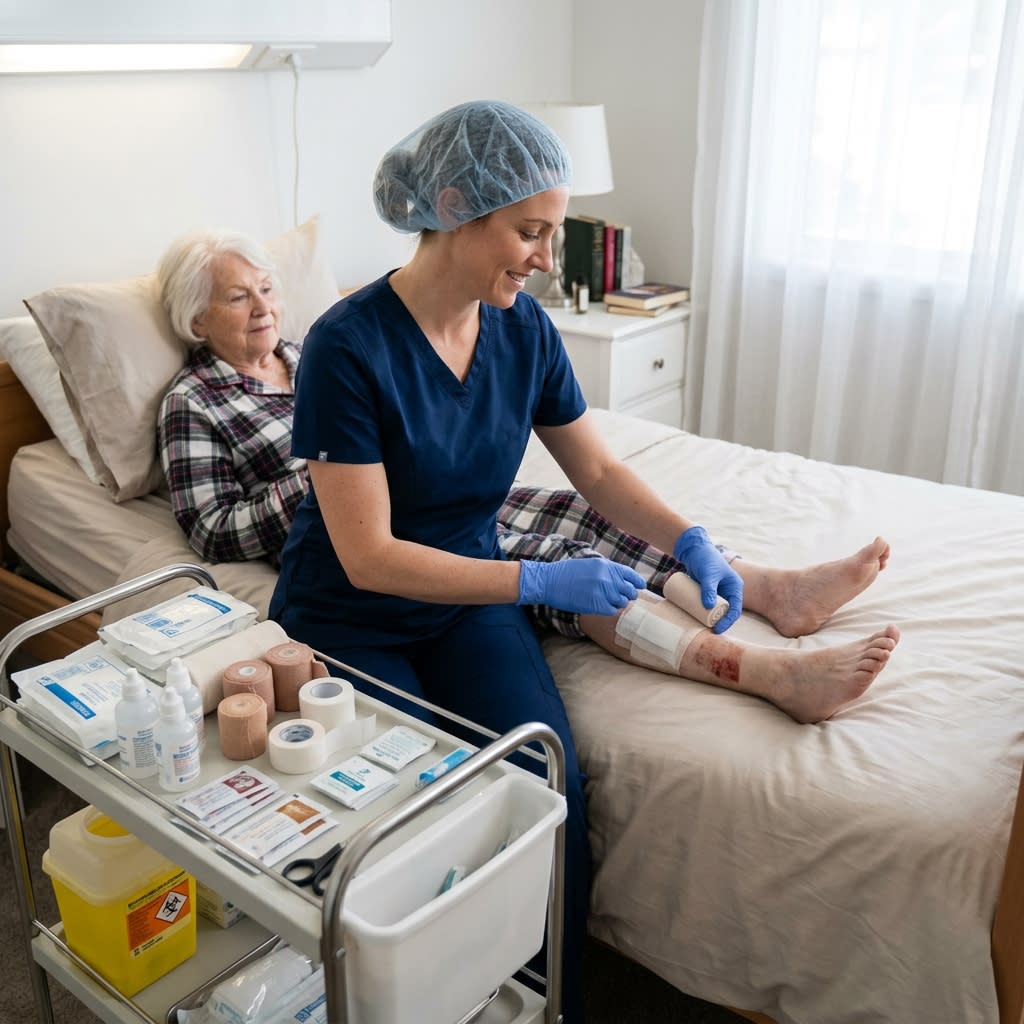
Wound Care: When a Bedsore Has Already Developed
Stage 1 and 2 – Home Management:
- Relieve all pressure from the affected area immediately
- Clean the wound with normal saline (not hydrogen peroxide or iodine on open wounds)
- Apply appropriate wound dressing (hydrocolloid, foam, or transparent film dressings)
- Change dressing as per schedule (typically every 1–3 days depending on exudate)
- Monitor for signs of infection: increased redness, warmth, pus, odour, or fever
- Document wound size, depth, and appearance at each dressing change
Stage 3 and 4 – Medical Intervention Required:
- Consult a wound care specialist or surgeon
- May need debridement (removal of dead tissue)
- Specialised dressings: alginate, hydrogel, negative pressure wound therapy (VAC)
- Antibiotics if infection is present
- Nutritional supplementation and possibly IV fluids
- Regular physician follow-up and wound reassessment
Common Wound Care Mistakes Families Make
- 🚫 Using betadine/hydrogen peroxide on open wounds – These kill healing cells along with bacteria
- 🚫 Exposing wounds to air – "Letting it breathe" actually slows healing; moist wound healing is faster
- 🚫 Massaging red areas – This damages already compromised tissue further
- 🚫 Using heat lamps or hair dryers on wounds – Increases tissue damage
- 🚫 Ignoring early redness – Stage 1 is the window for prevention; ignoring it leads to Stage 2–4
- 🚫 Inconsistent repositioning – The single biggest cause of bedsore development
How NurseNest Plus Prevents and Manages Bedsores
Our trained nurses follow hospital-grade wound prevention and management protocols:
- Strict 2-hourly repositioning with documented turning schedule
- Daily full-body skin assessment of all pressure points
- Professional wound care using evidence-based dressings and techniques
- Nutritional monitoring to ensure adequate protein, vitamins, and hydration
- Air mattress management – Ensuring pressure-relief devices are functioning properly
- Incontinence management – Immediate cleaning and barrier cream application
- Wound documentation – Photographs and measurements shared with physicians for tracking
- Family education – Training family members in basic repositioning and skin checks
NurseNest Plus – Zero Tolerance for Bedsores, Maximum Care for Your Loved Ones